V. rudicollis, Male
Acknowledgements
Many, many thanks to Rowan Wolf, Dave Kirshner, and my wife Eilene.
History
V. rudicollis “Black Roughneck Monitor” was purchased from an importer in Florida, came into my possession Nov 2020 measuring roughly 24 inches in full length. The monitor had obvious signs of dehydration, neither approximate age nor sex were determined.
Also present was a mouth abscess on the right lower jaw and tail rot with a break a few inches in from the tail tip. Five to six inches of tail were removed and treated with several stitches. Abscess was lanced, drained, and cleaned, antibiotics administered. Monitor appeared to have no long term repercussions from either the tail necrosis or the jawline abscess.
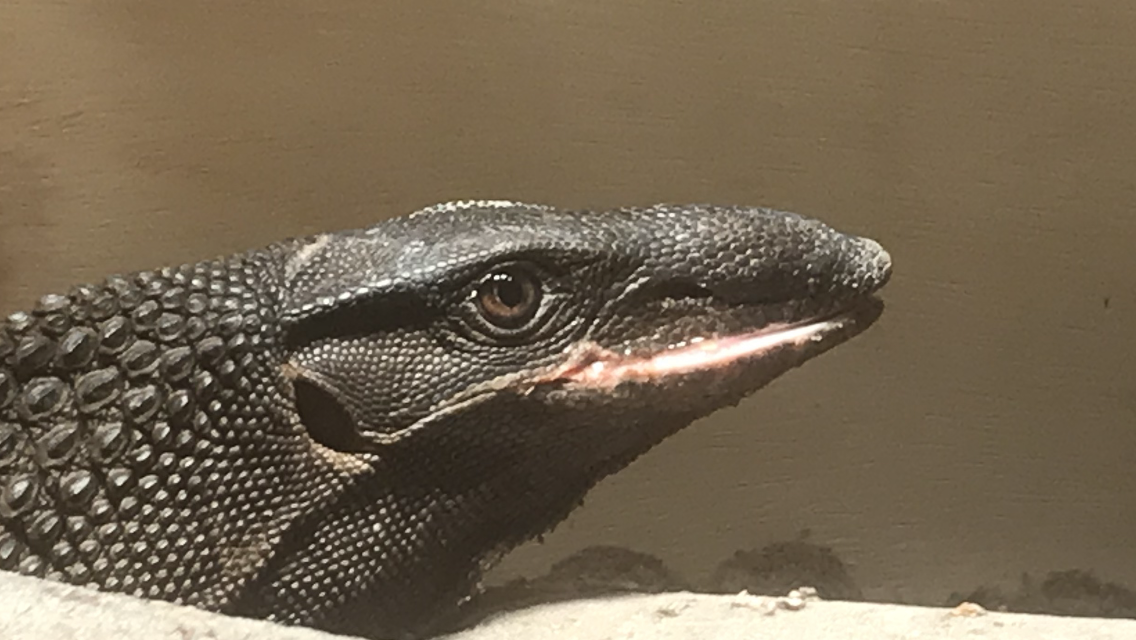
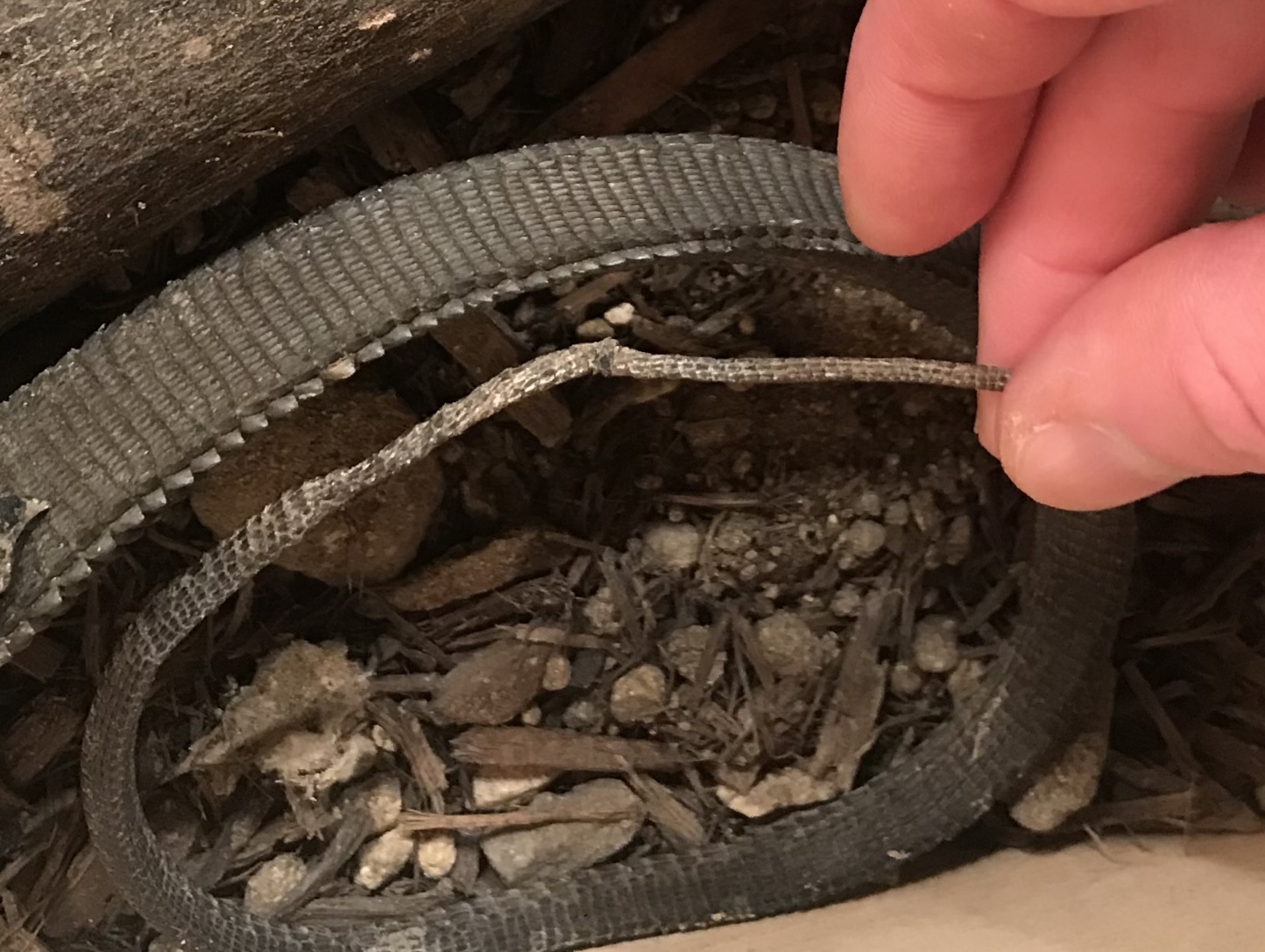
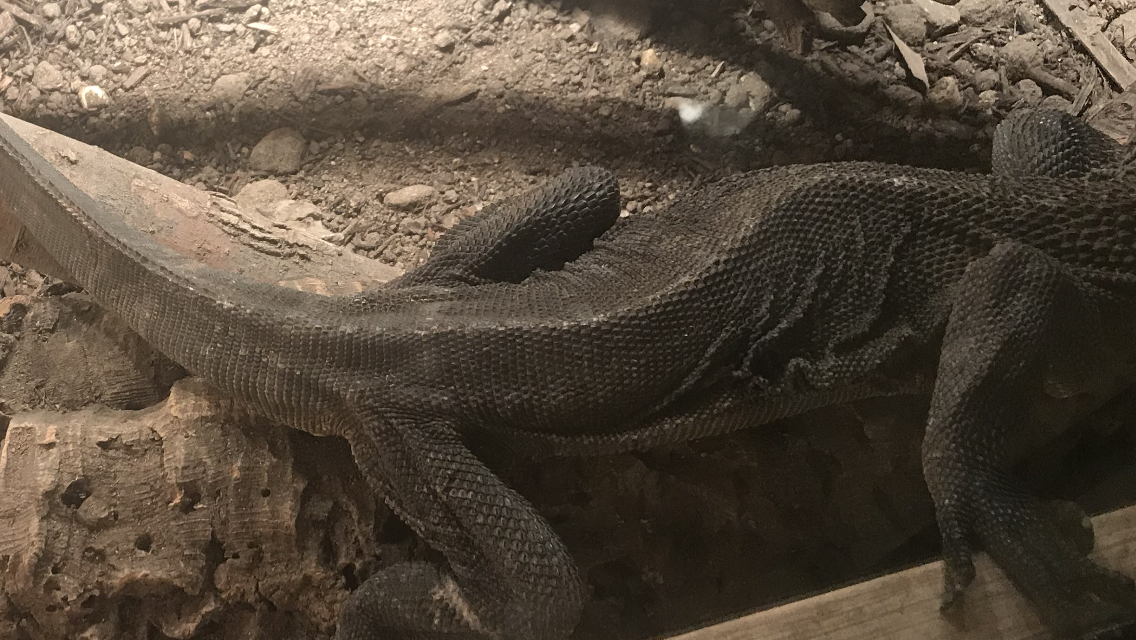
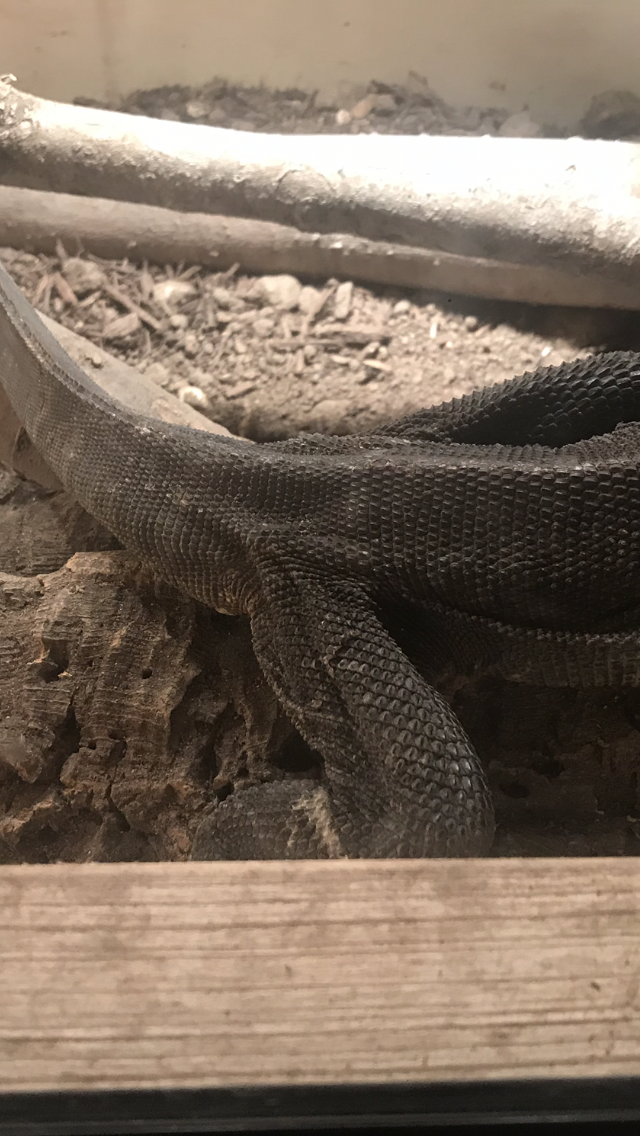
From a subjective standpoint as his keeper for almost three years, I can say that although the monitor ate successfully, sought out hydration, thermoregulated, basked, and hid regularly in a daily routine, from a behavioral stance he never quite lost the hyperanxious demeanor Roughnecks exhibit. There were a significant number of hides, barriers, and overall safe areas so the monitor never had to flee, but despite that he would regularly bolt away and slam into the side of the enclosure. I completely refrained from force-handling from the start, and the monitor began to feel comfortable taking food off tongs. Regardless, he always spooked easily no matter how comfortable he became with my hands near or in the enclosure doing basic maintenance/feedings. Despite ingesting an appropriate amount of food of wide variety and having access to (and utilizing) clean drinking water, the monitor never quite put on a reasonable amount of weight.
Husbandry
Food items were roaches (B. dubia, E. posticus, E. distanti, E. serranus, B. peruvianus), day-old chicks, button quail, tilapia, salmon, rodents of varying sizes and fat contents, etc.
Water was doused into the substrate regularly to create visual steam on the glass panels, and clean drinking water was offered daily in a stainless steel bowl that was sanitized with F10 between uses.
Basking side of the enclosure contained multiple Philips 75W halogen outdoor flood bulbs arranged close together to create a “zone” with range approx. 110F-170F depending on positioning of the monitor. Ambient temp was of a gradient approx. 70F-95F from end to end. Humidity fluctuated in cycles as water was added, average was approx. 70%-97% from end to end. Enclosure was a sizable “wood box” with plate glass bypass doors front-opening. Ventilation was minimal as is best practice, spacing around the glass panels was less than a half inch. Temp and humidity gradients held throughout the day and evenings 9am-9pm, bulbs were turned off 9pm-9am and ambient room temp cooled to 75F at night.
Substrate was a mix of top soil and washed play sand, roughly 8in-14in deep. Branches were generally crepe mertle hosed off, other tree limbs cleaned and hosed off, or bulk cork tubes.
Death and Mini-Necropsy
For the second half of Sept 2023 the monitor’s weight began to decline. With no other changes in environment or feeding/watering cycle monitor appeared more dehydrated and appeared to lose fat stores and some muscle mass. Monitor regurgitated one meal at that point, I withheld food for a day or so, then offered a slightly smaller meal for the next three days, and regurgitation did not reoccur. Stools became loose but had no undigested items in the stools that I observed.
Monitor was found in enclosure about to expire Oct 1 2023, visually looked very thin and although eyes were opening and shutting, lizard was not attempting to run away from my hands entering the enclosure. Monitor died within 30min of this observation and I began necropsy 30-40min after death.
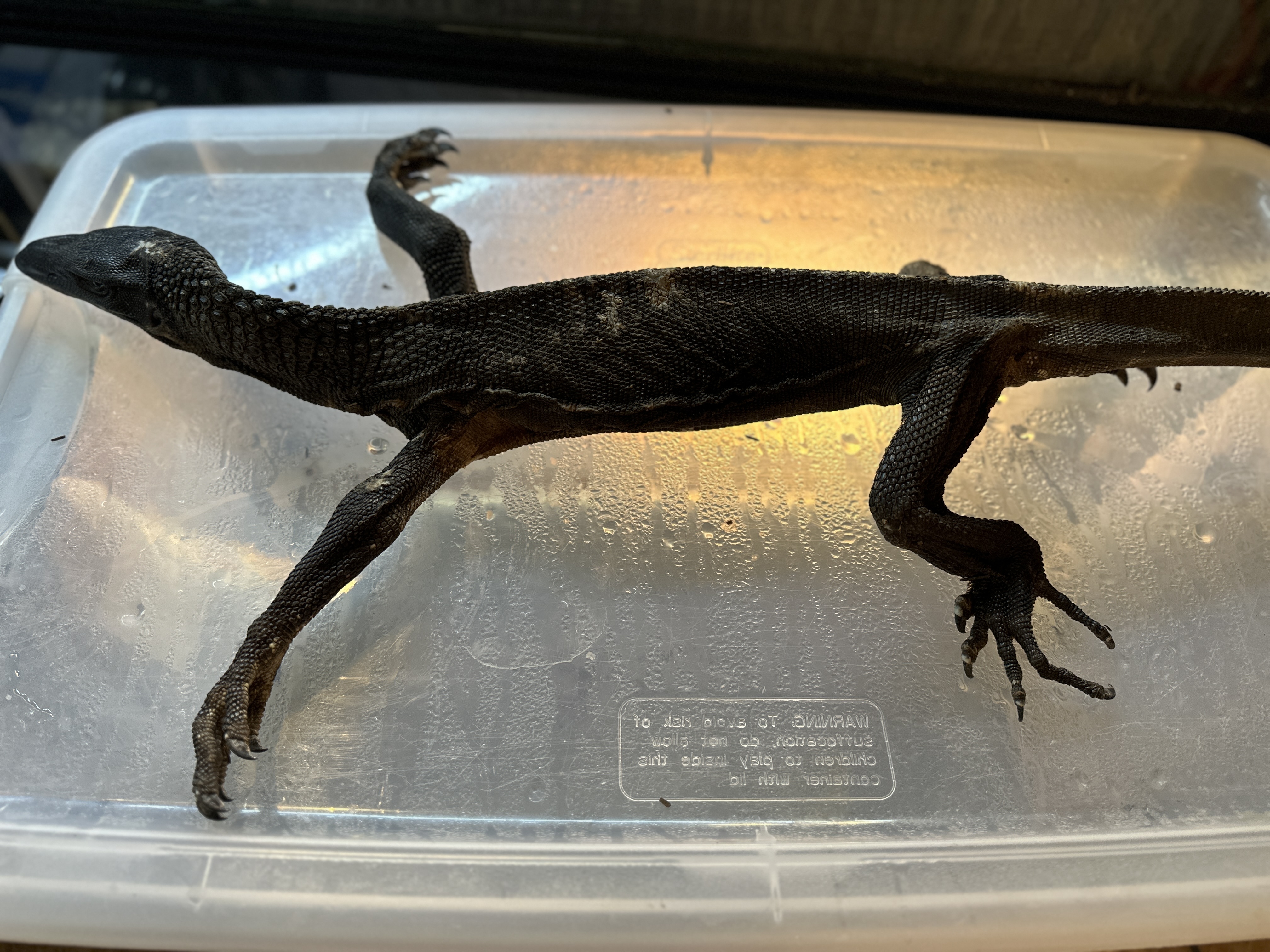
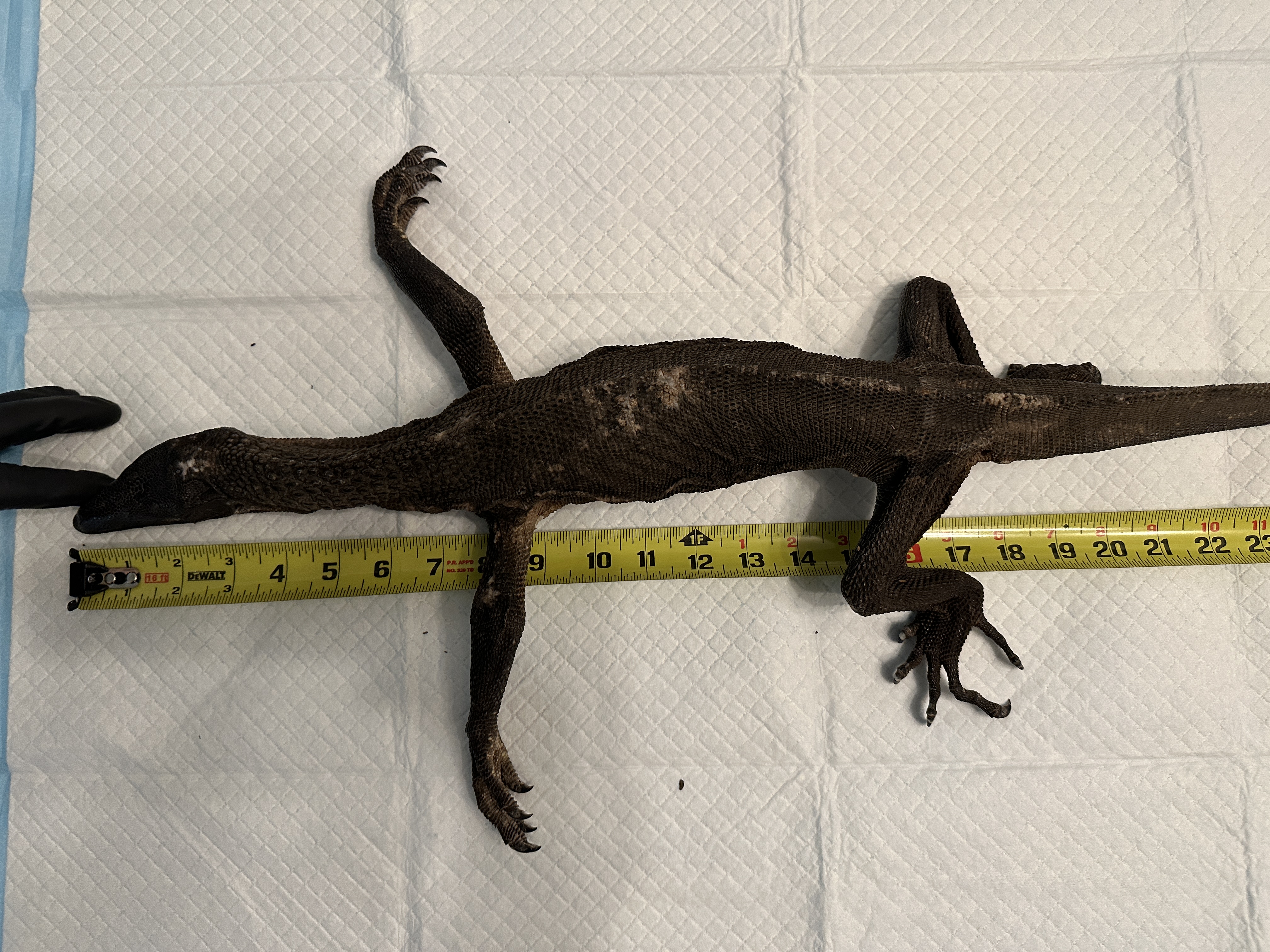
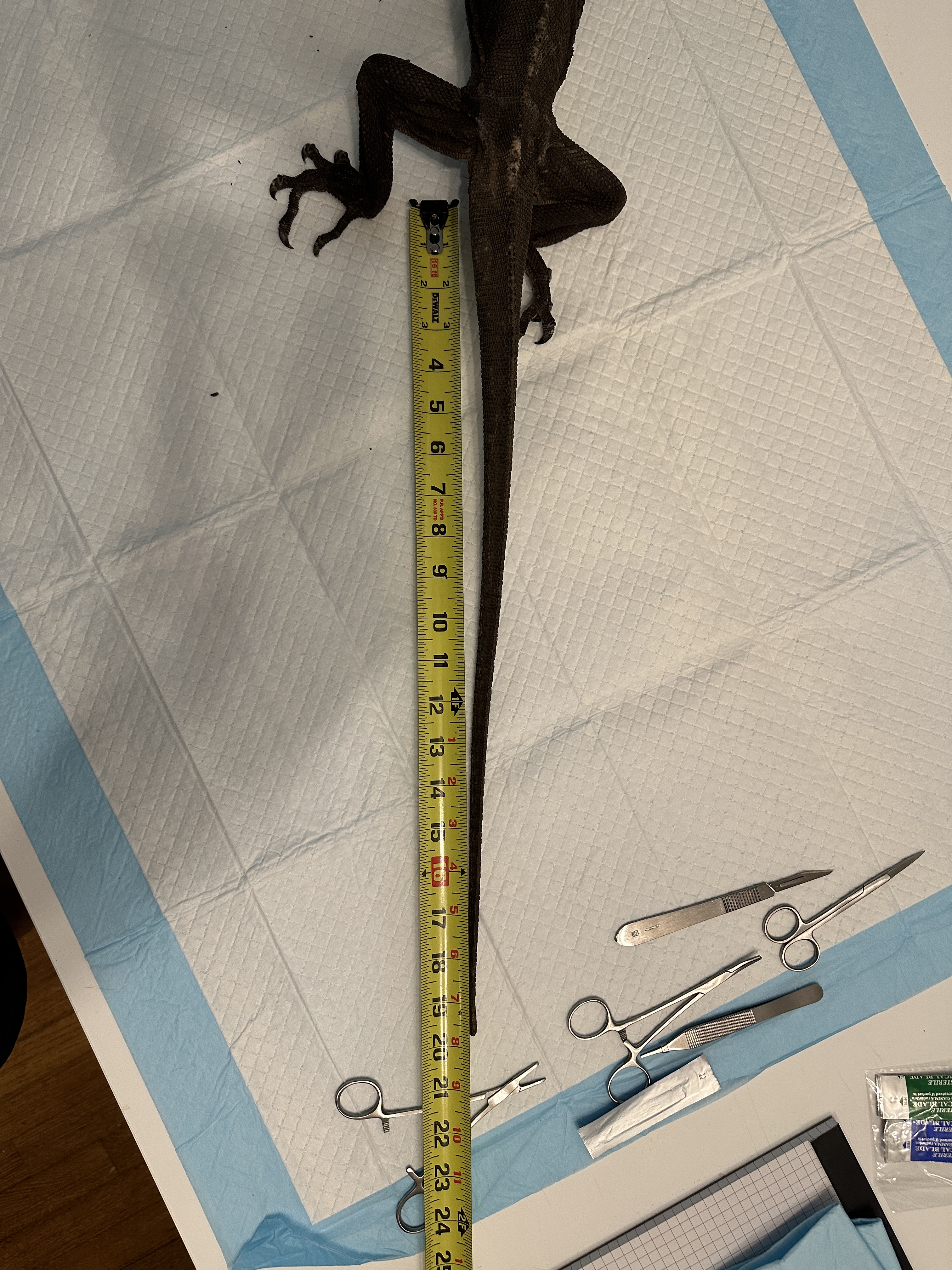
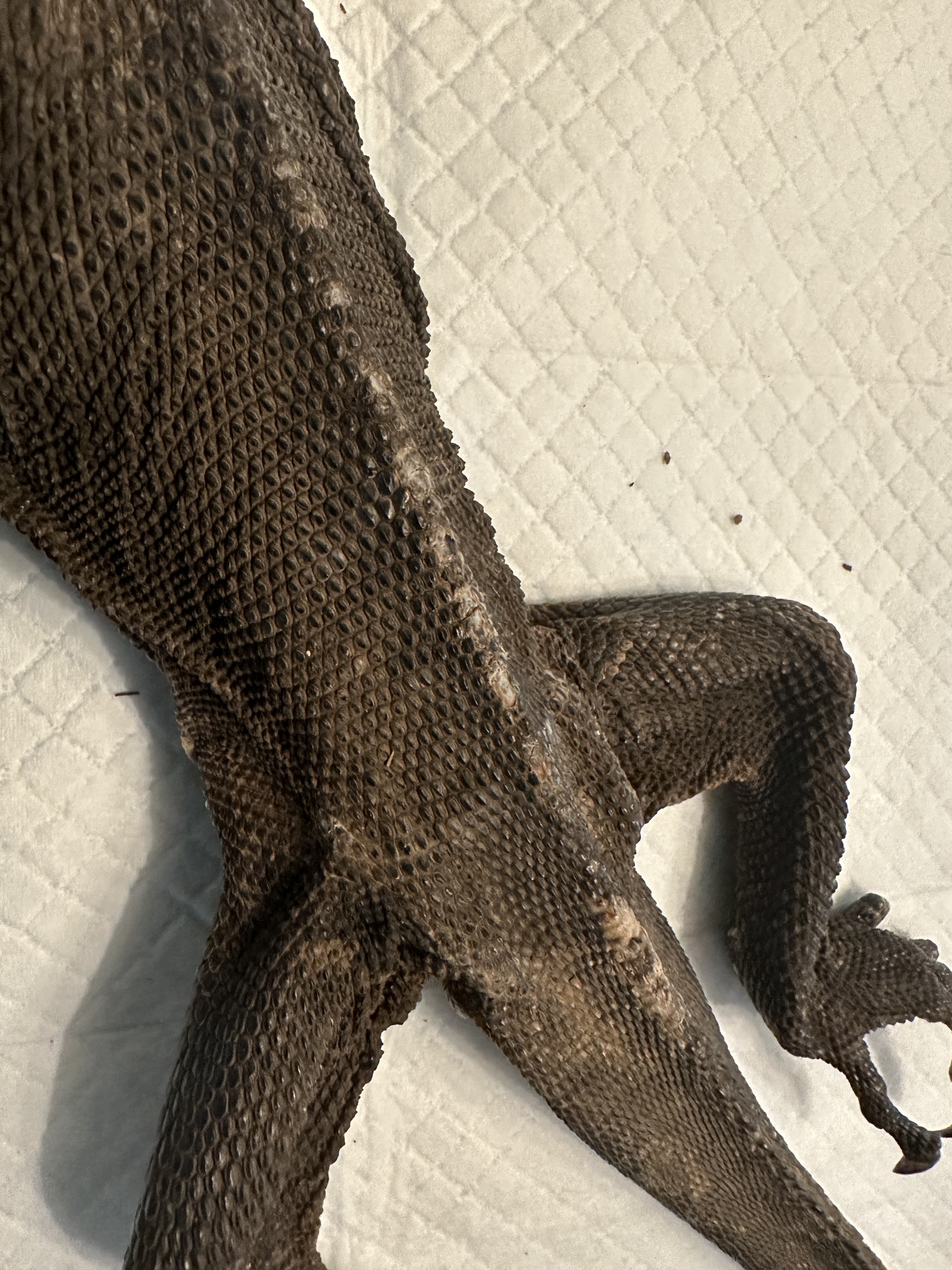
Upon removing him from the enclosure it was even more evident that he had dropped a really significant additional amount of weight and mass even over the past 24 hours since last observation. He was emaciated. Enclosure showed two new very loose stools and the water in the water area was clean and untouched. Monitor measured approx. 18 inches snout to vent and 20 inches vent to tail tip.
Off the record I have only had a few instances where I was seeking some resolution by cutting open a deceased monitor (which I am actually thankful for, my animals are otherwise healthy). My understanding of varanid anatomy is somewhat basic so I’m sure there will be significant gaps in my photos and conclusions. We don’t own a small scale able to weigh organs in grams, and were somewhat unprepared for the death of this particular lizard, so this is all very makeshift and unofficial. Bear with me.
Initial observations are that fat pads are a lot smaller than expected, which is understandable given the weight loss etc. No particular lesions or swollen organs were overly apparent.
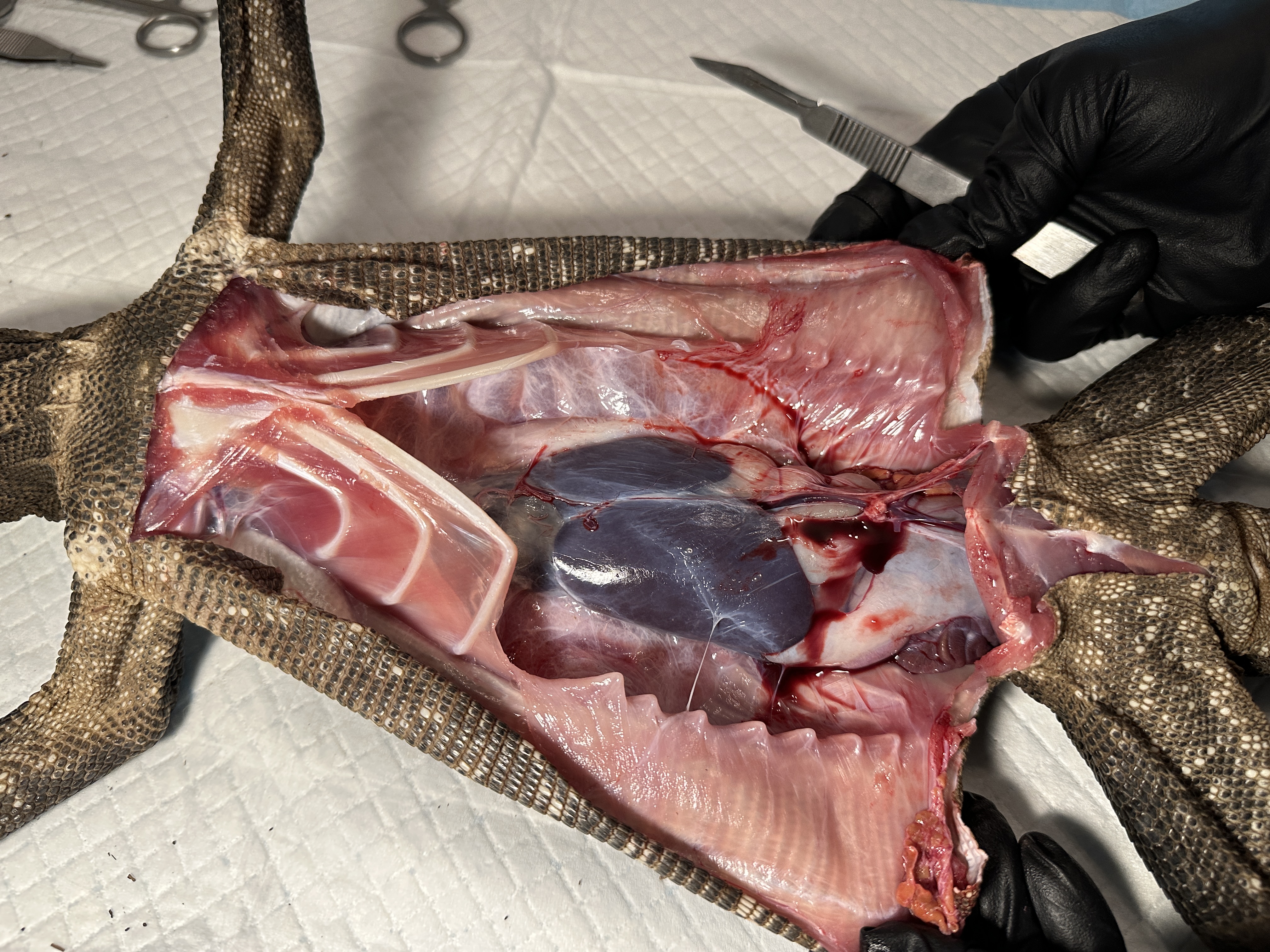

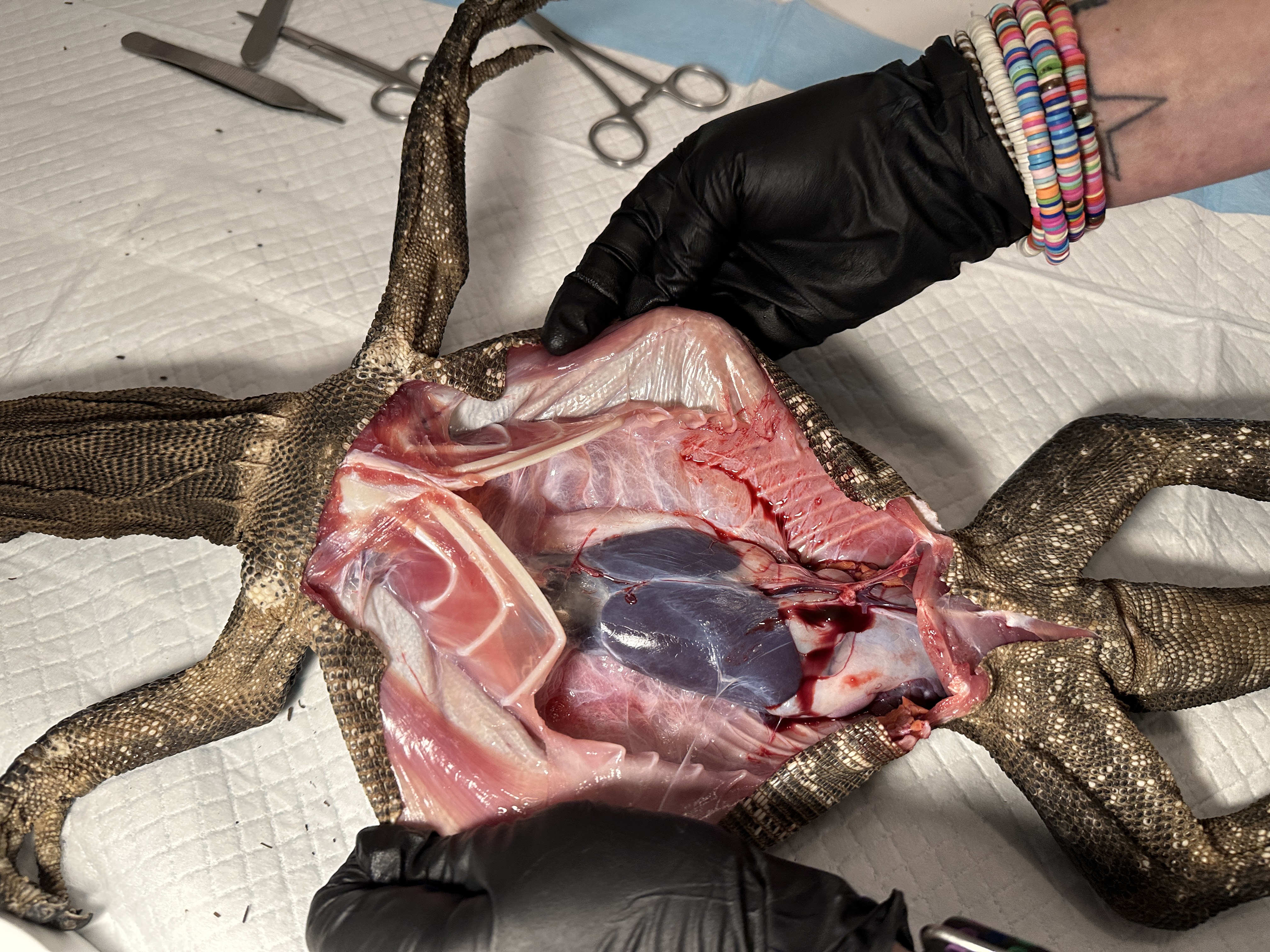

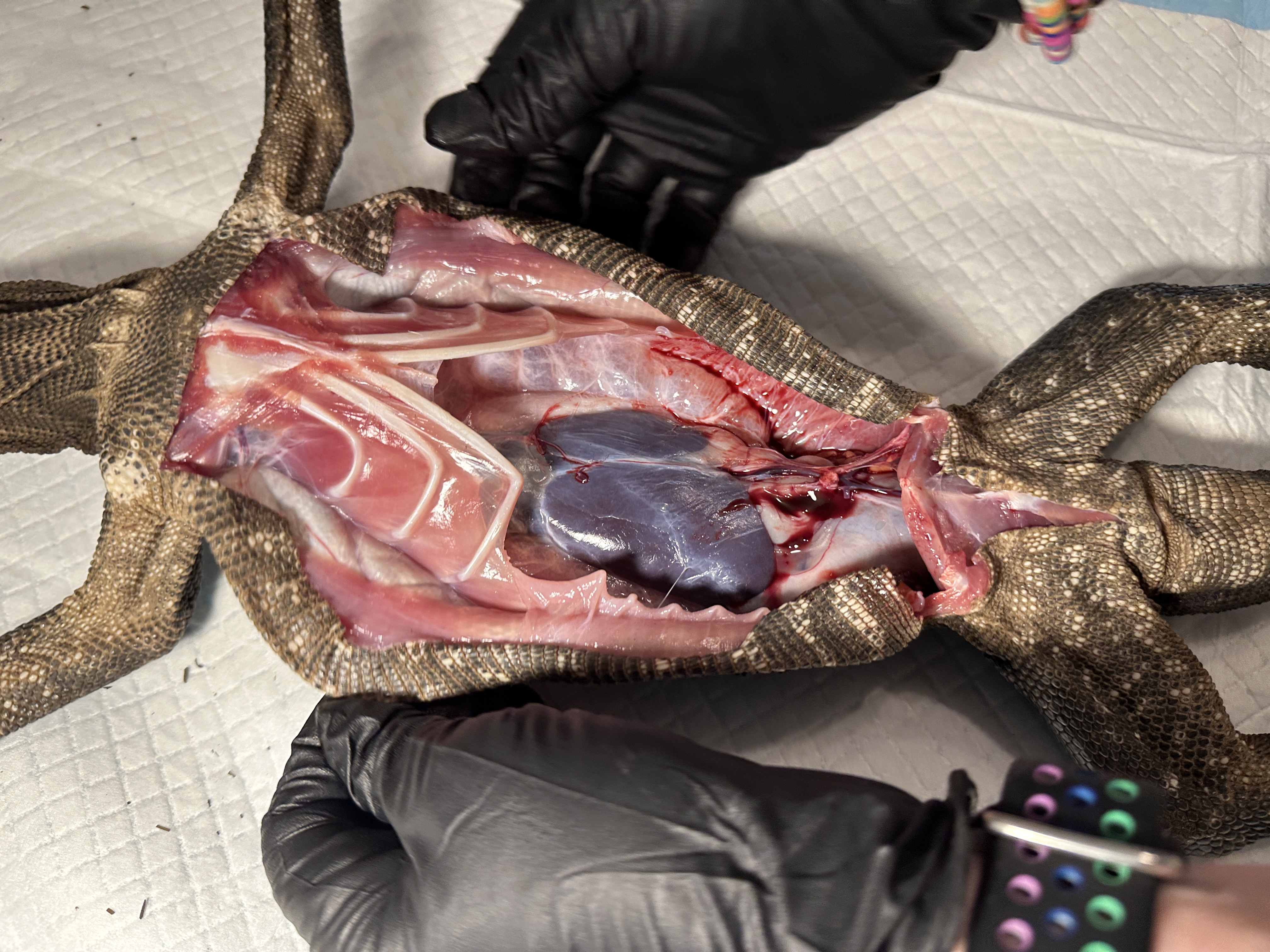
We were able to initially remove the heart, lungs, liver, gall bladder, and get to the digestive portions of the internals. There was stool present, it was hard but upon making an incision to remove the feces and examine them completely there was nothing undigested. Last few meals were frozen thawed mice of medium size, higher in fat content hoping to provide benefit there.
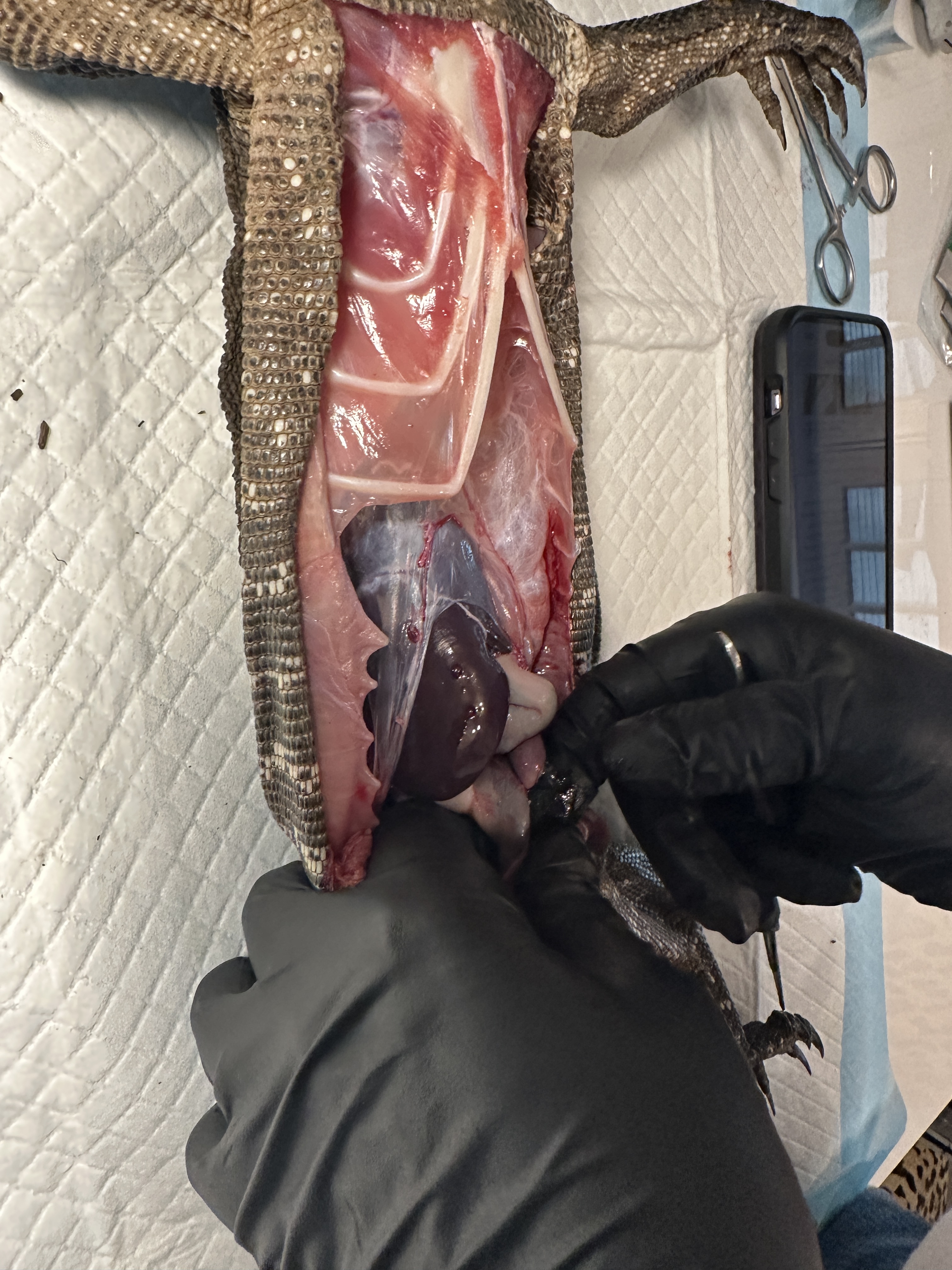
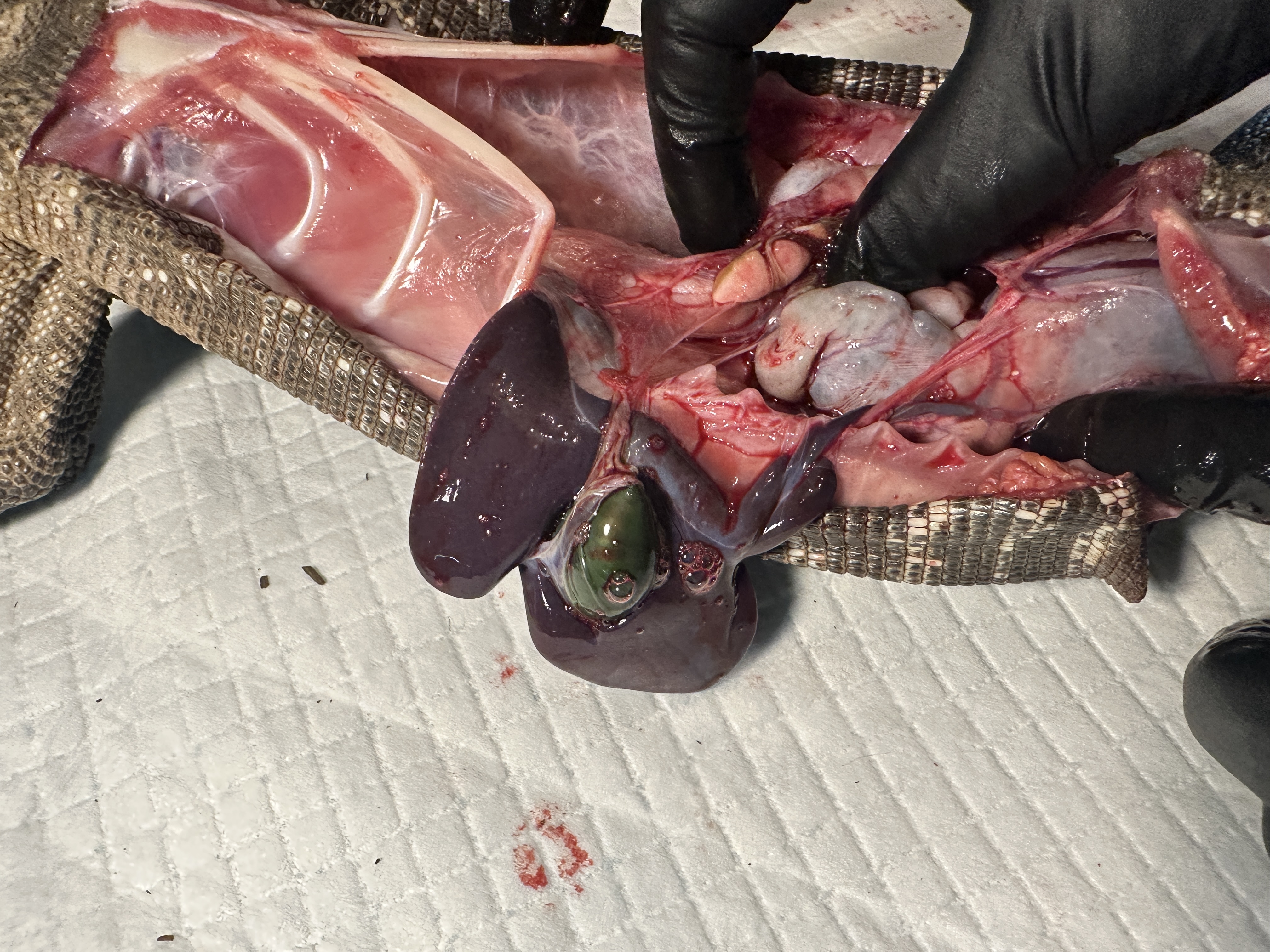
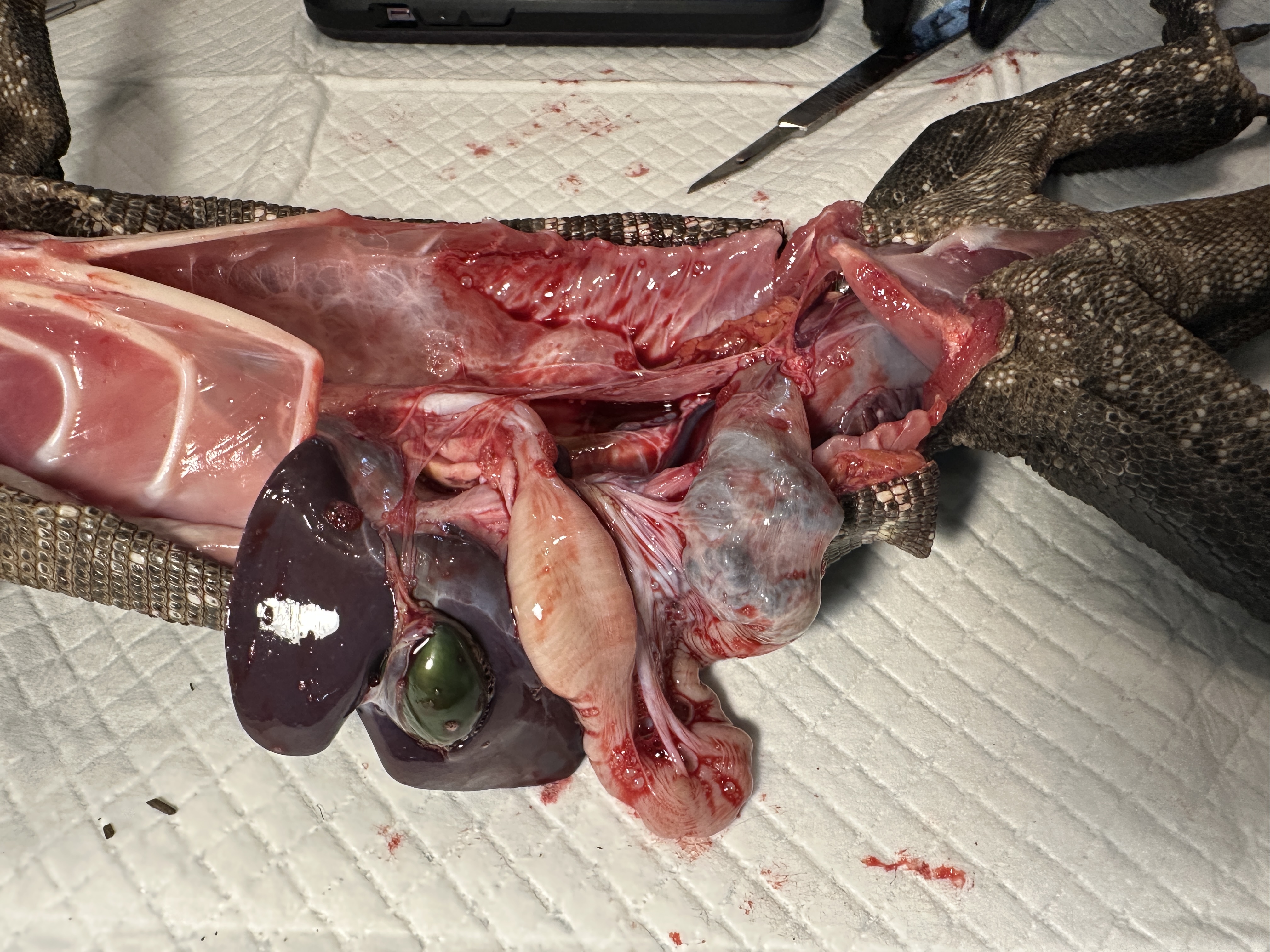
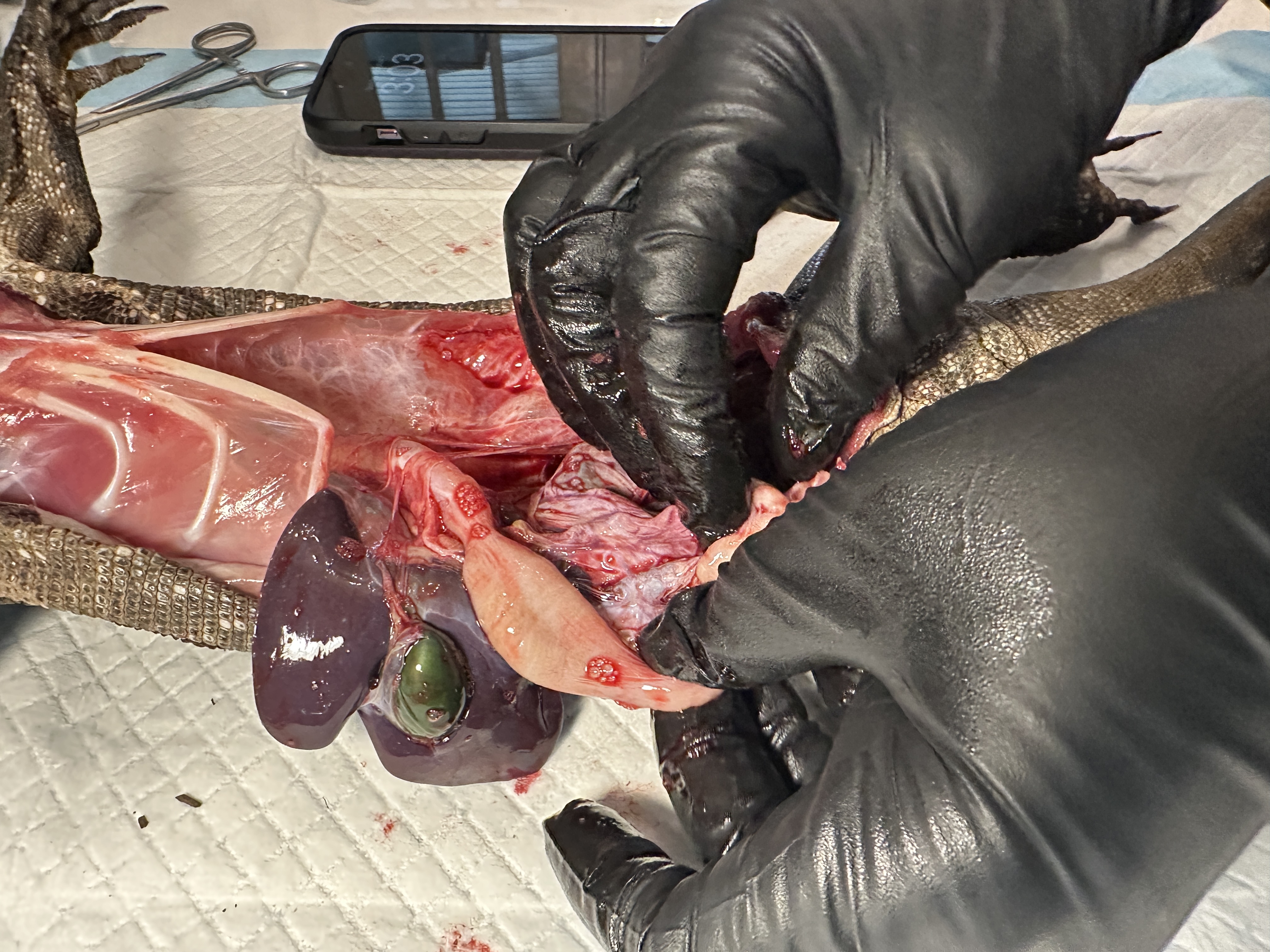

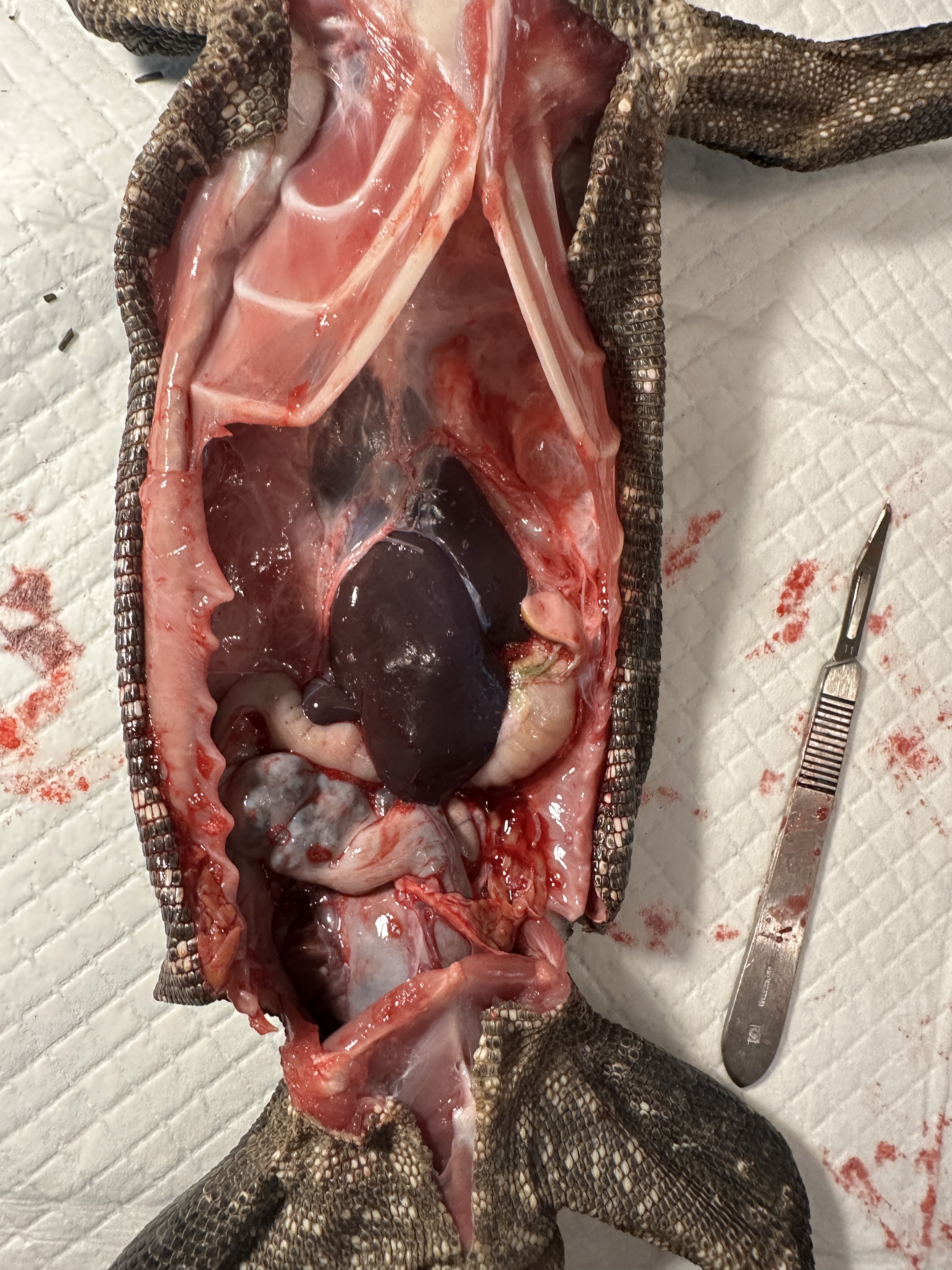
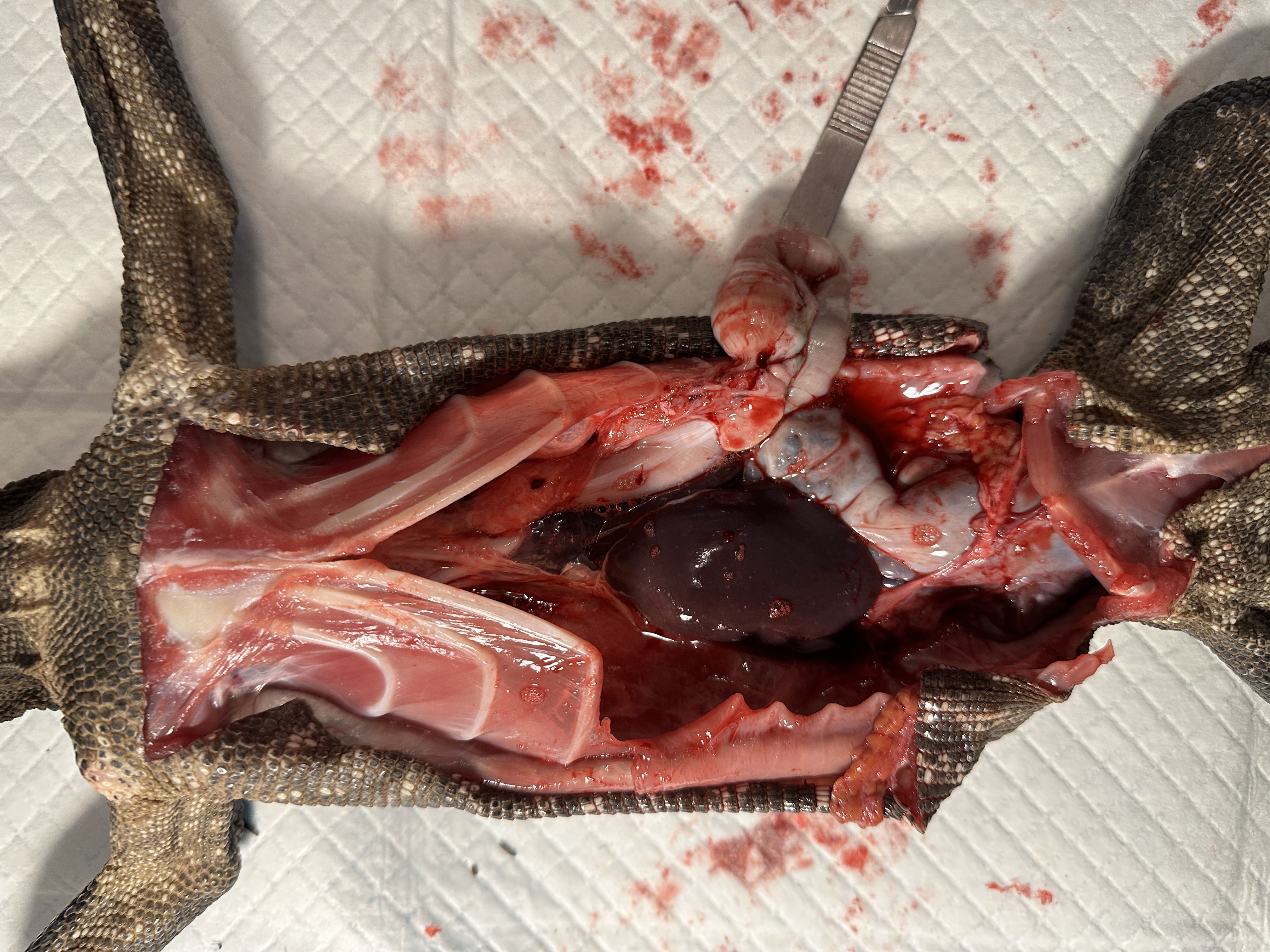
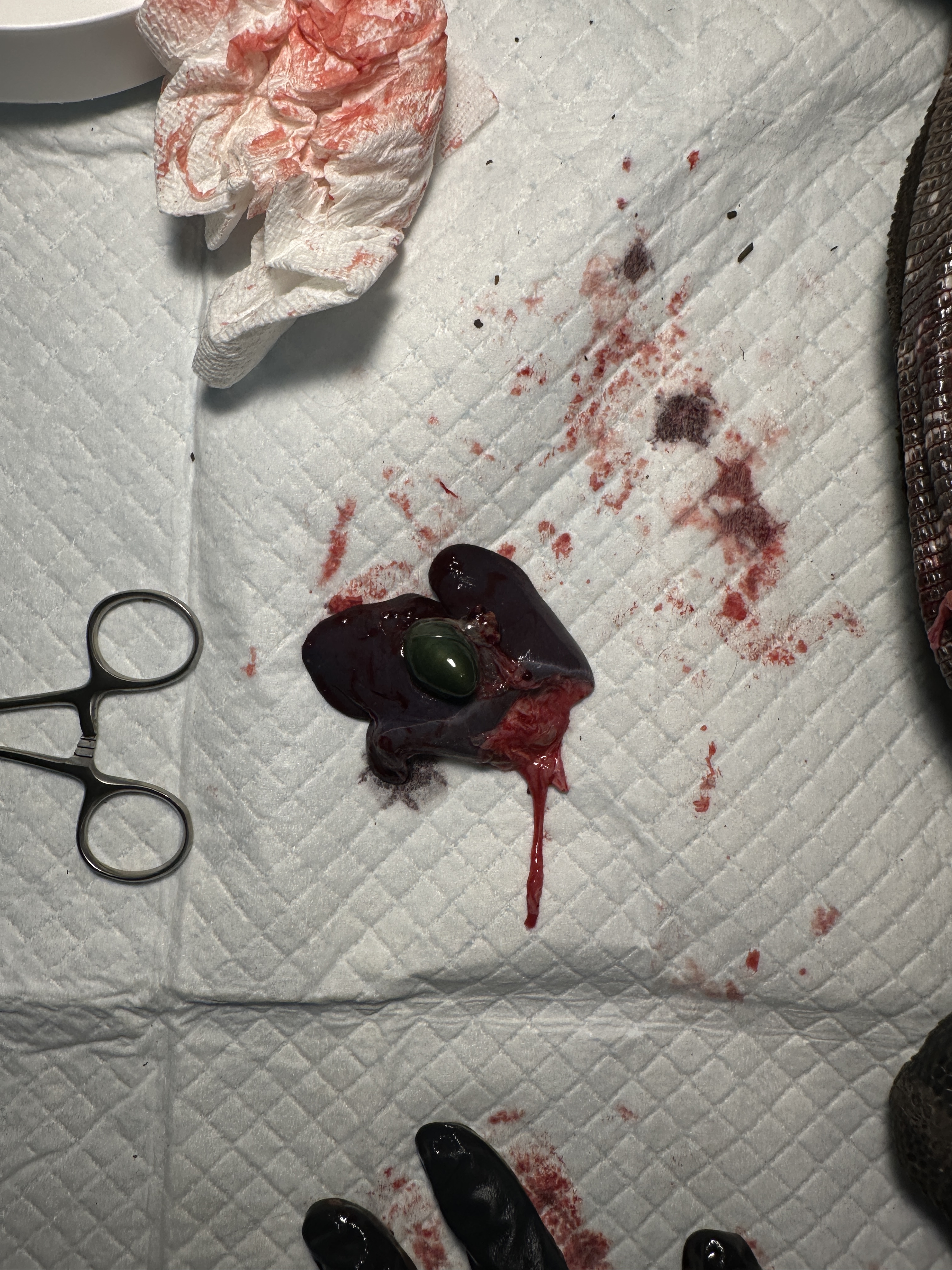
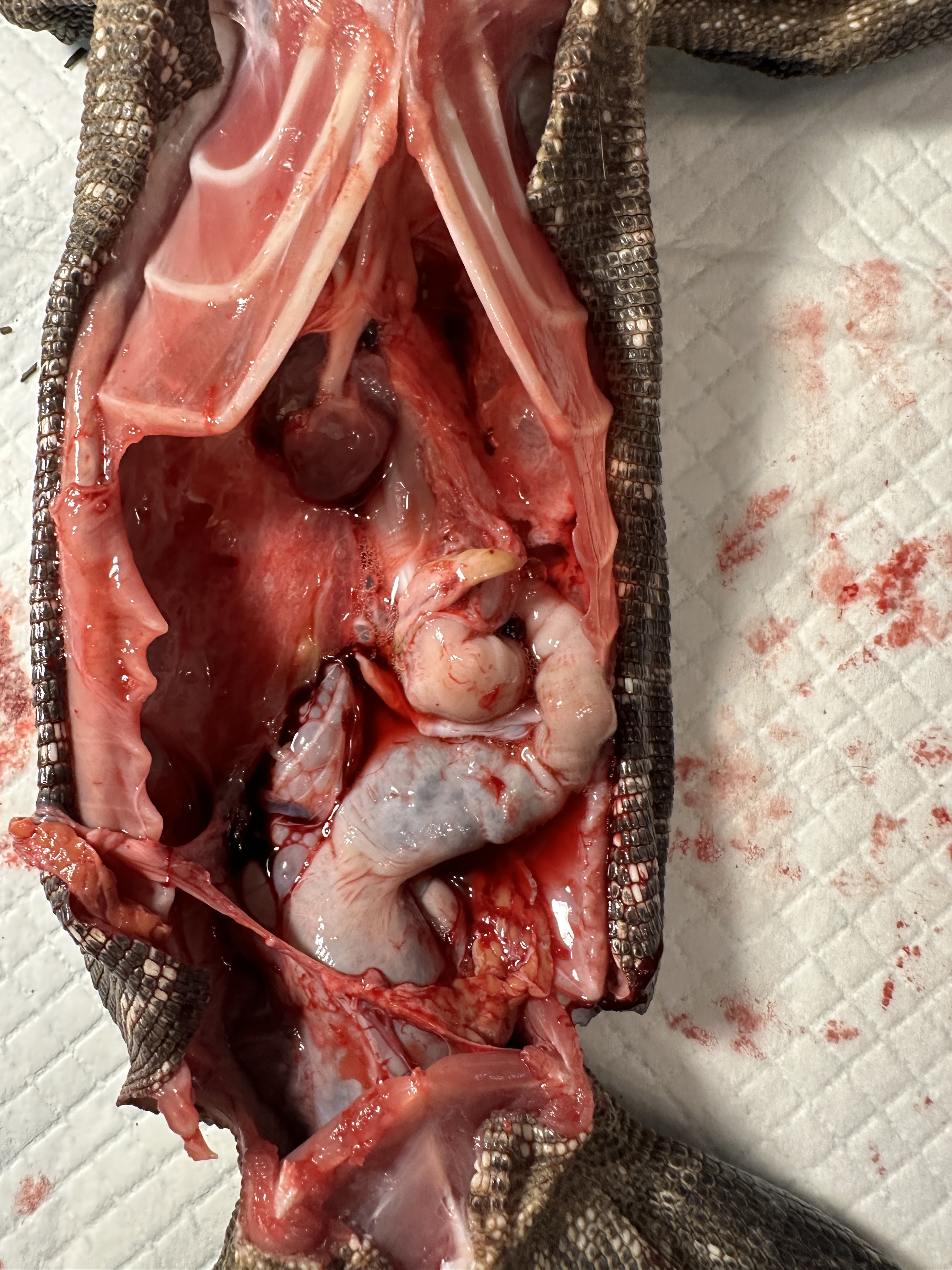
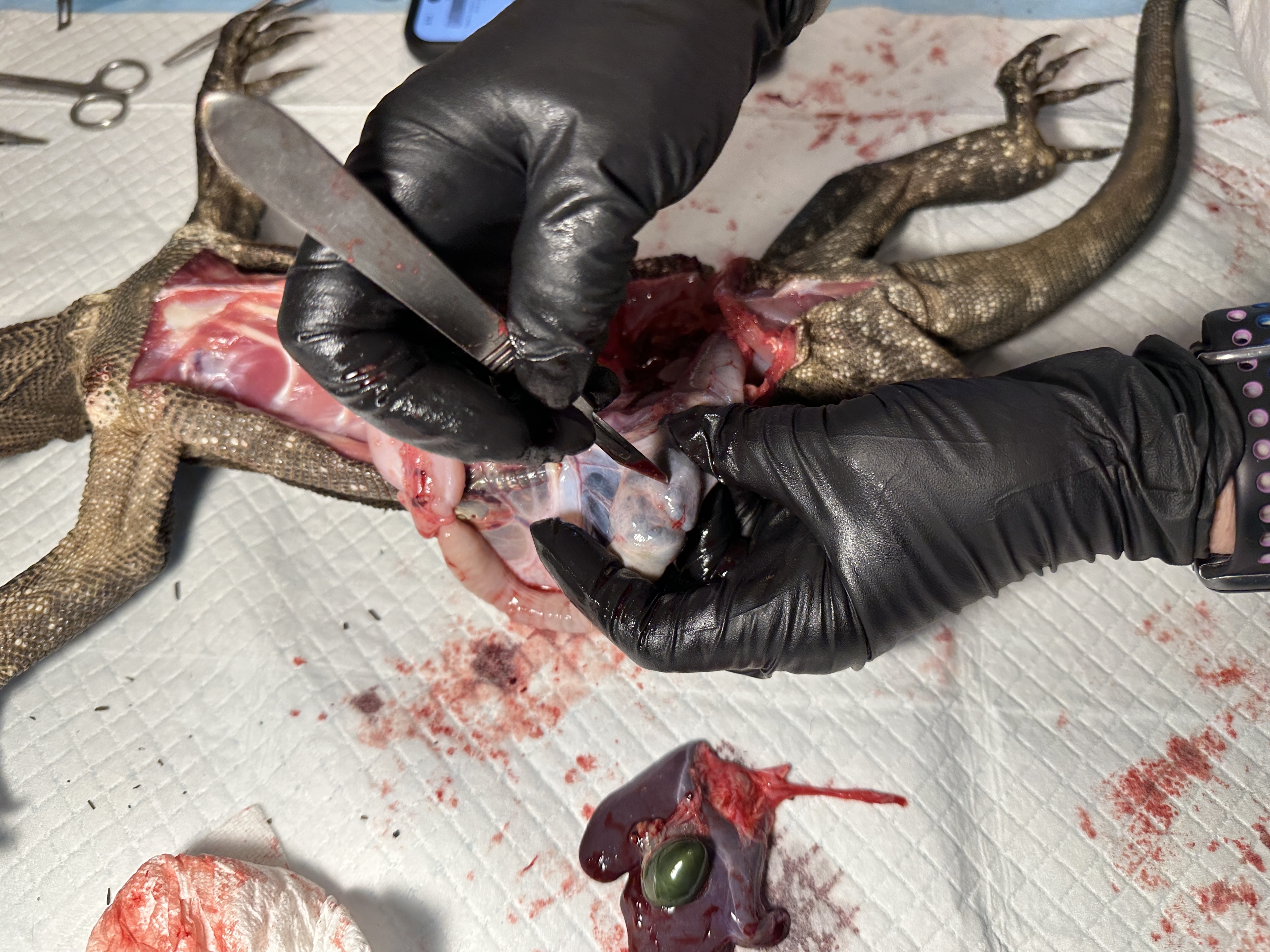
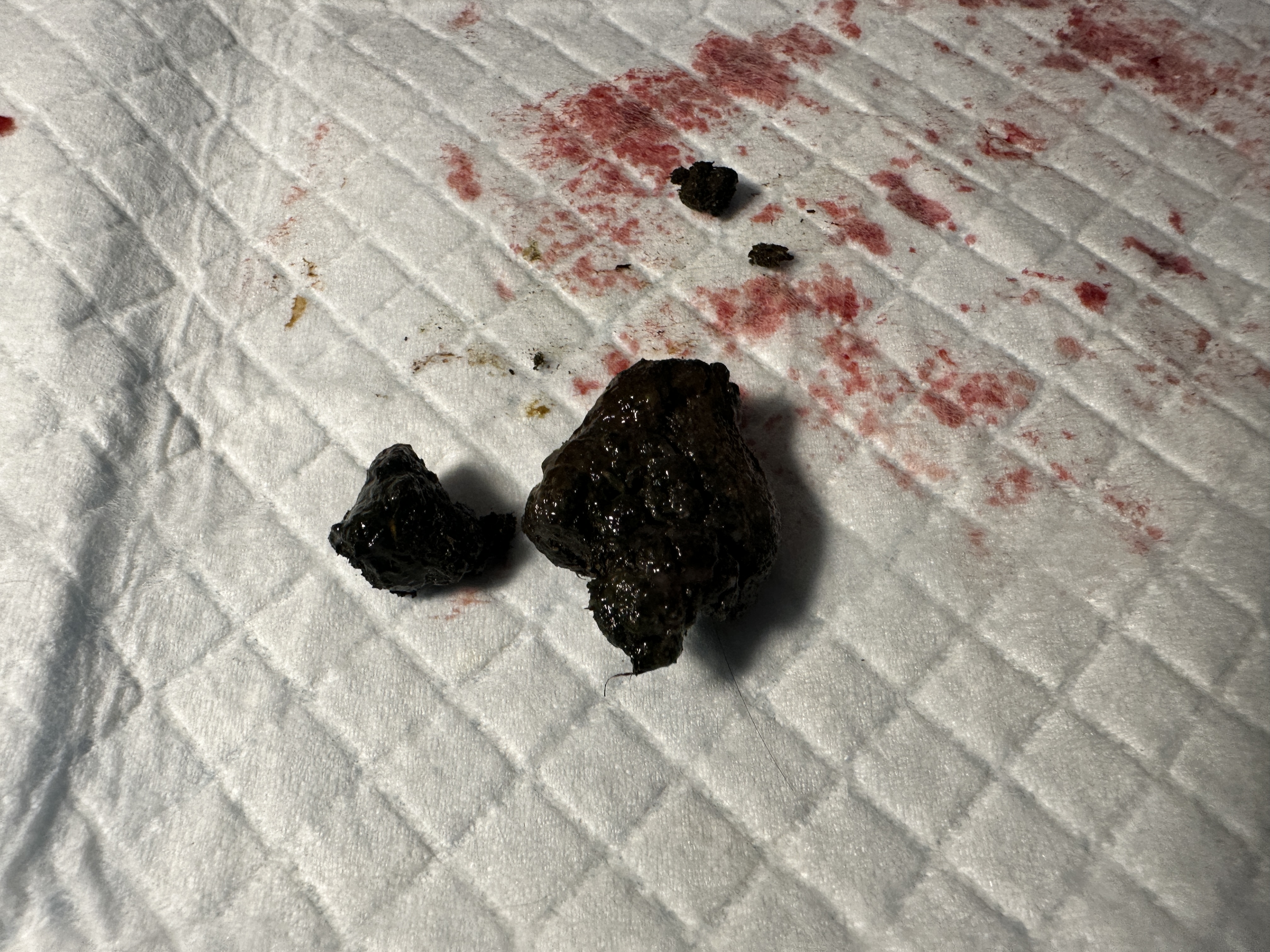
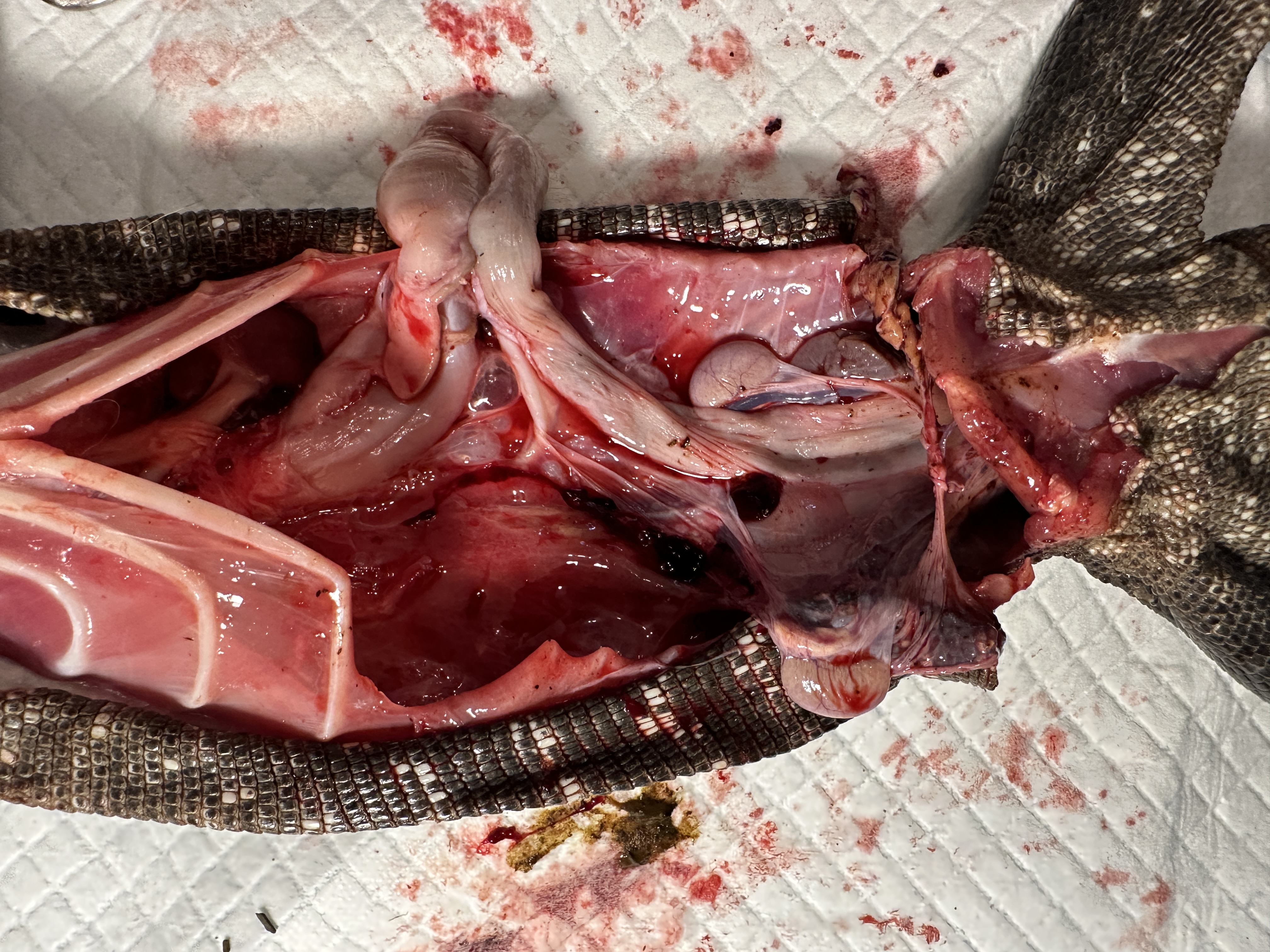
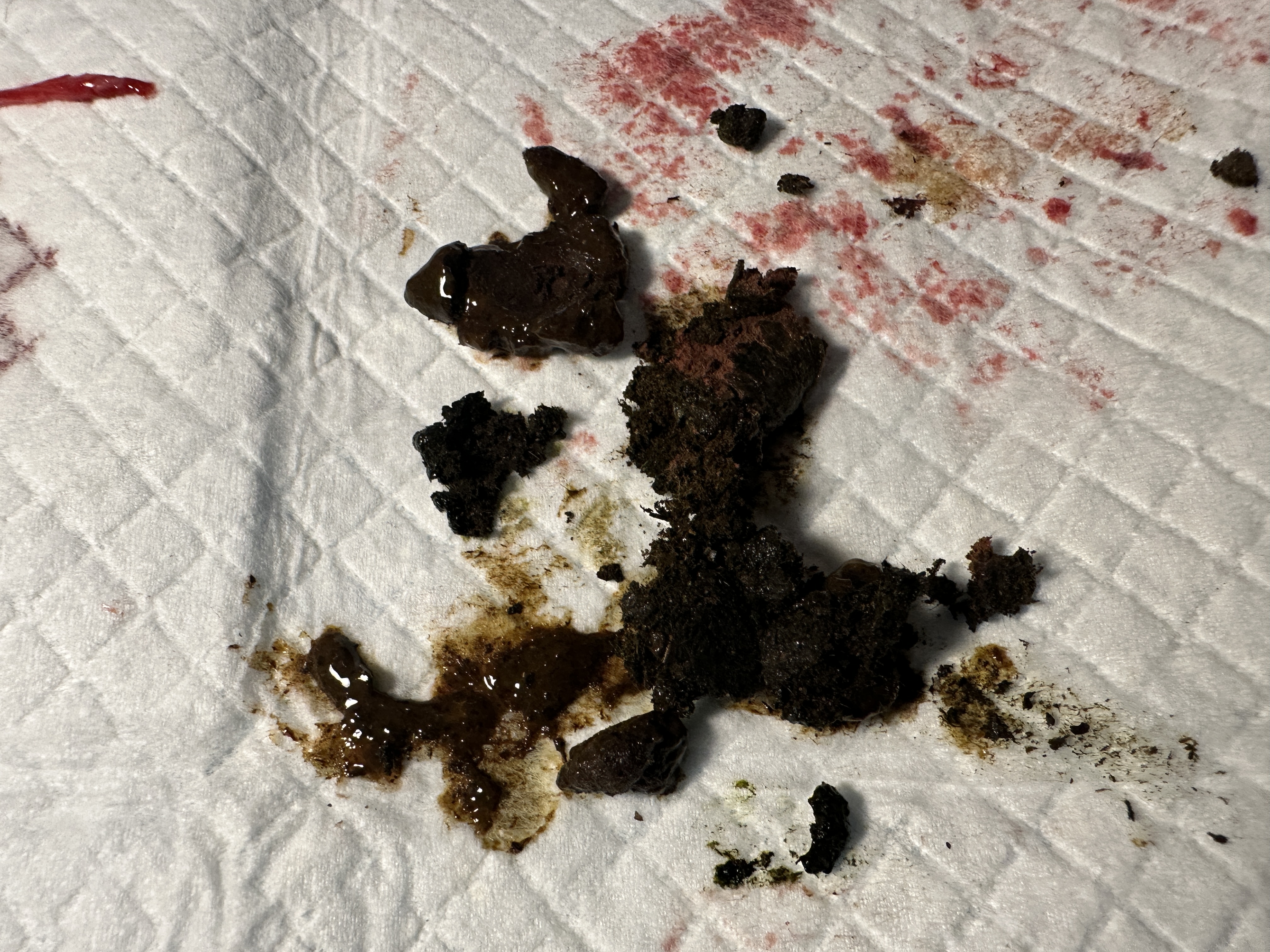
Further toward the cloaca there were urates that were about ready to pass.
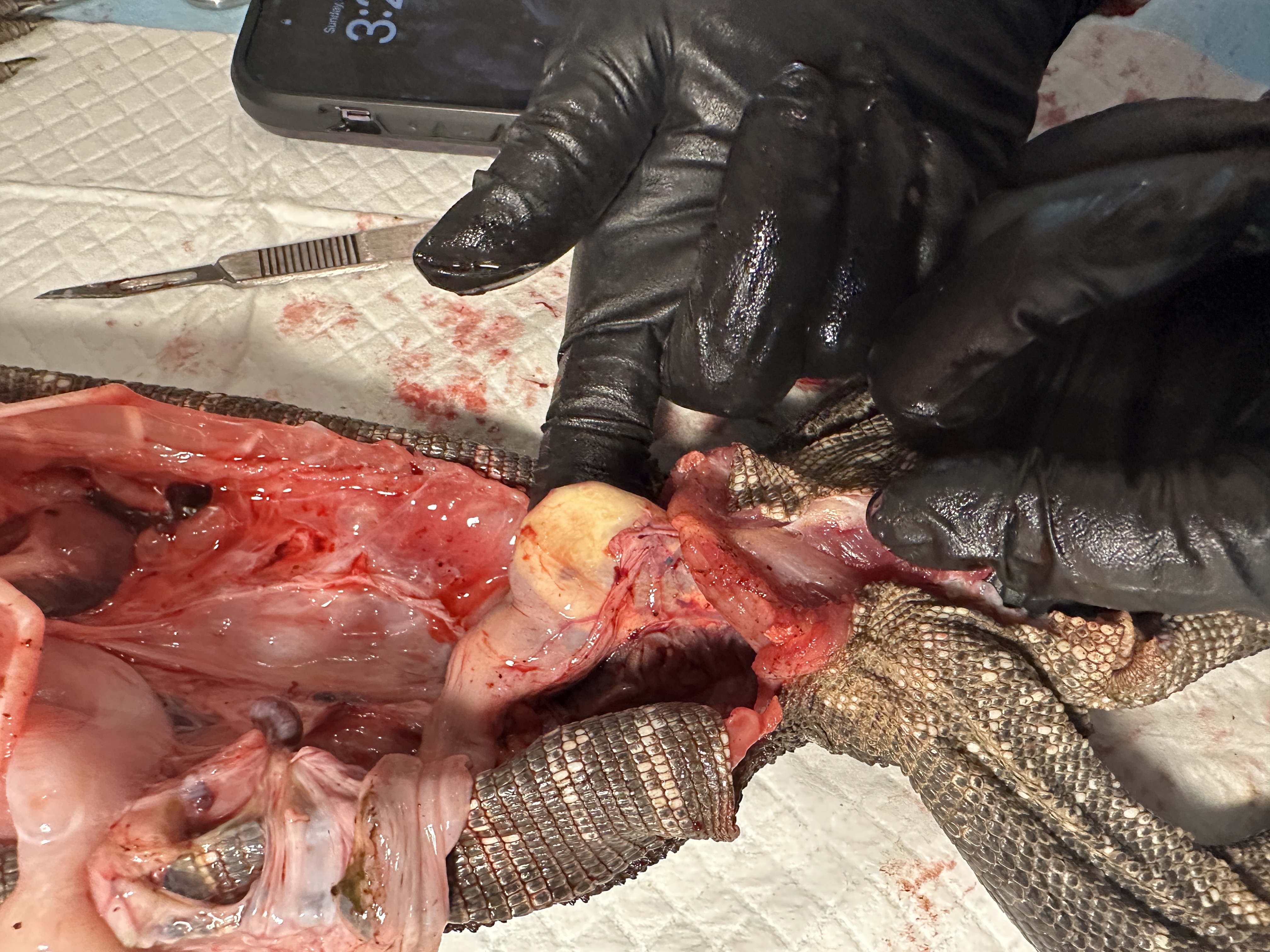
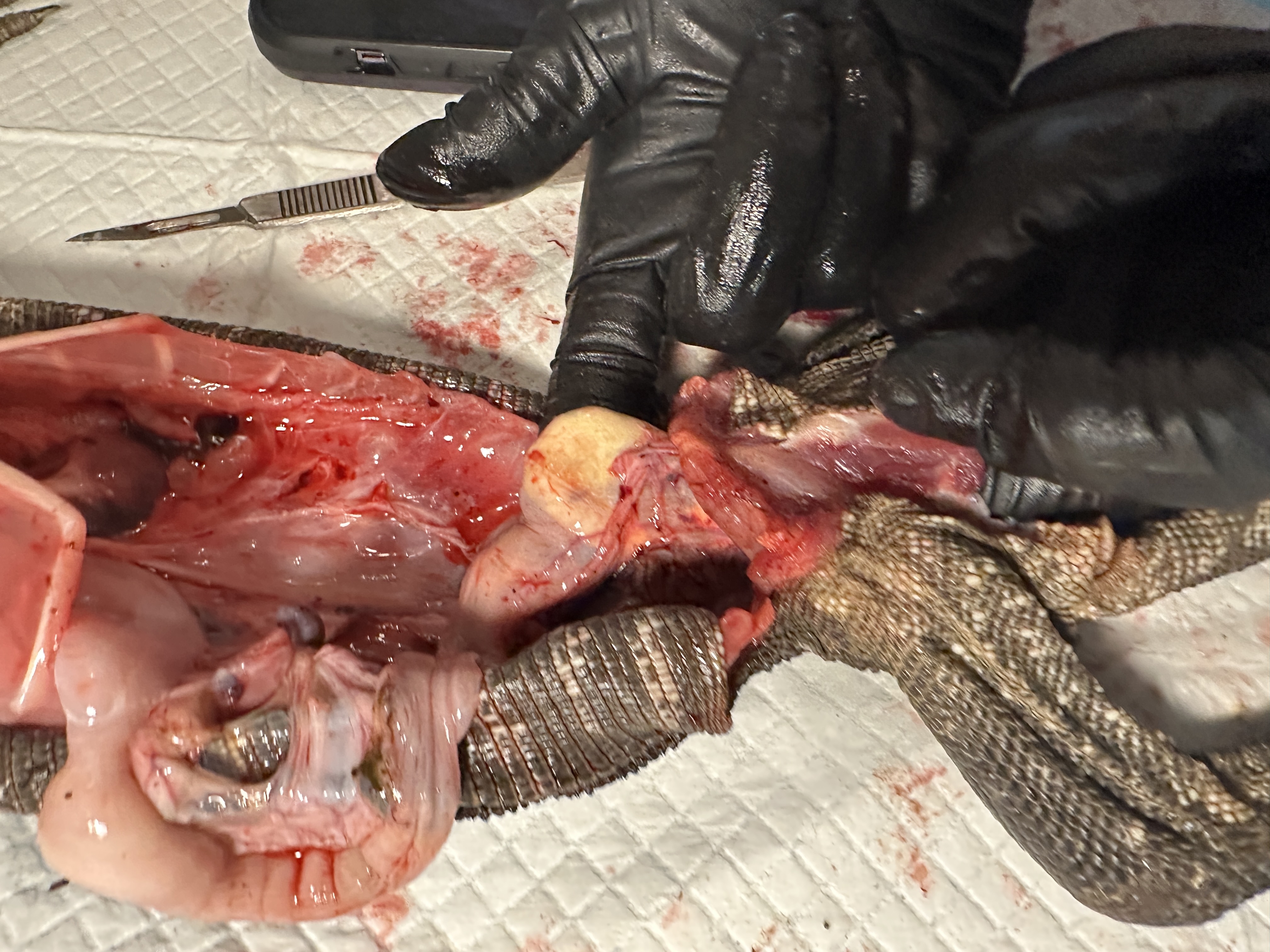
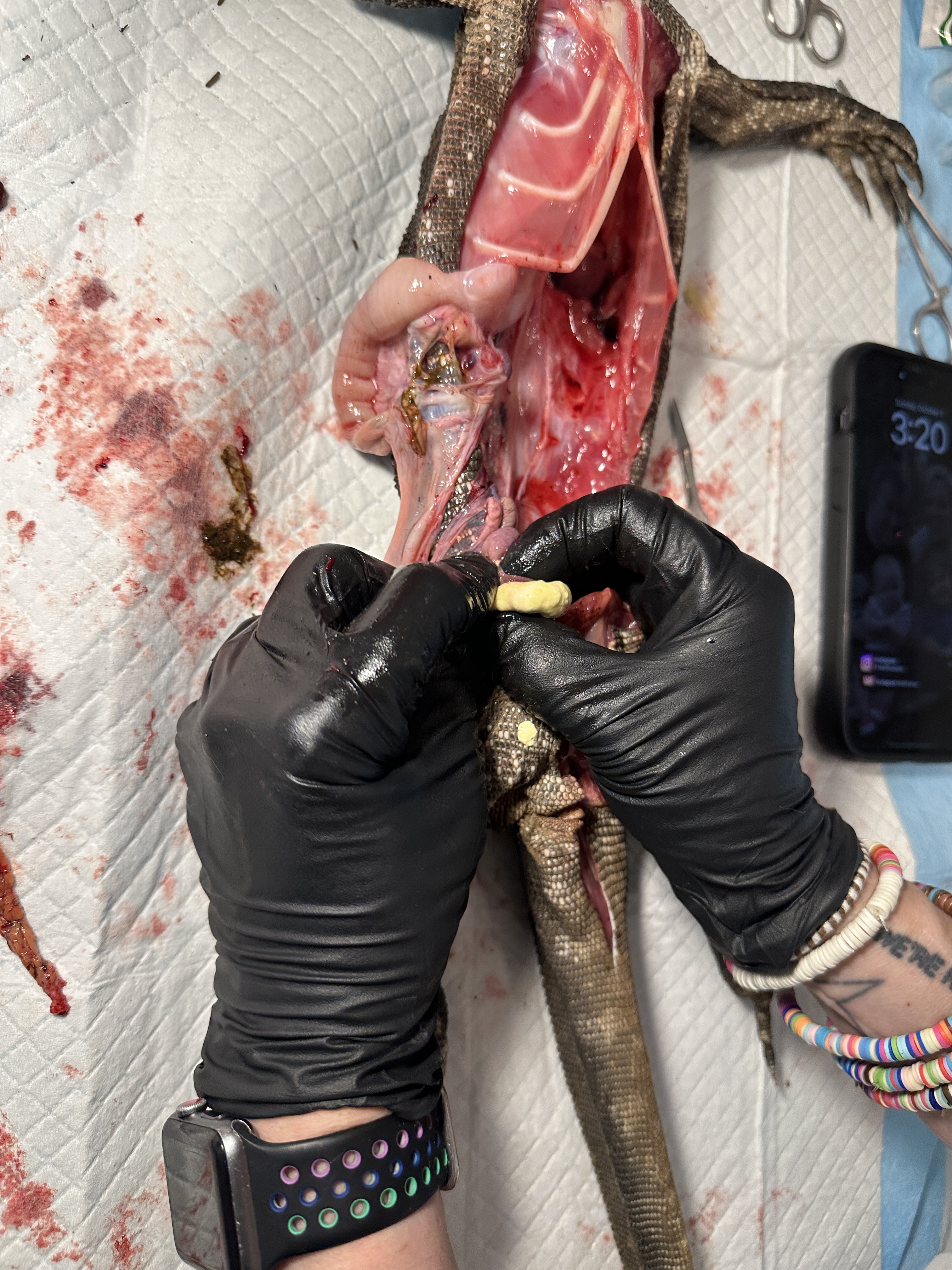
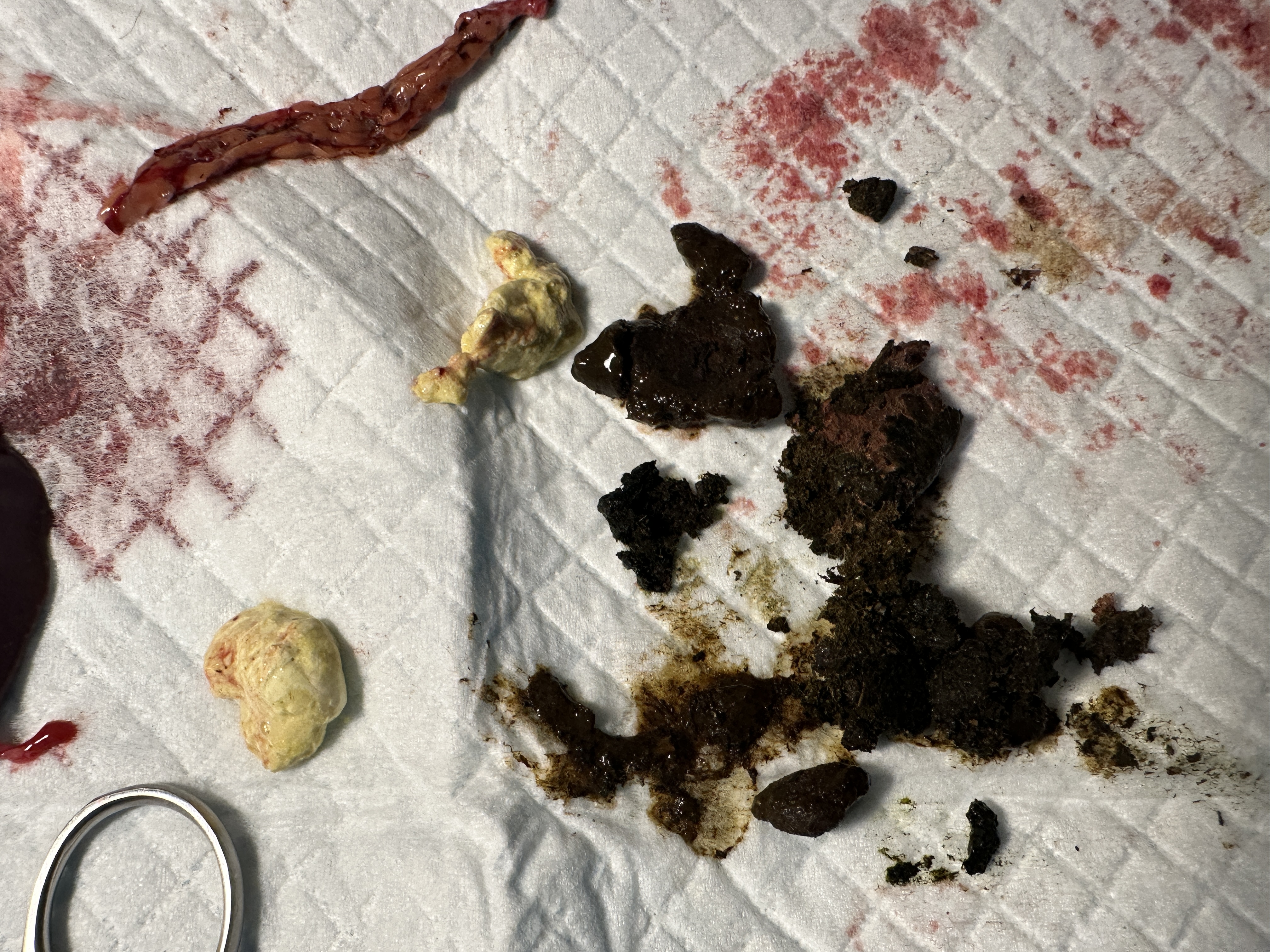
Testes and kidneys on either side of the lower abdominal cavity.
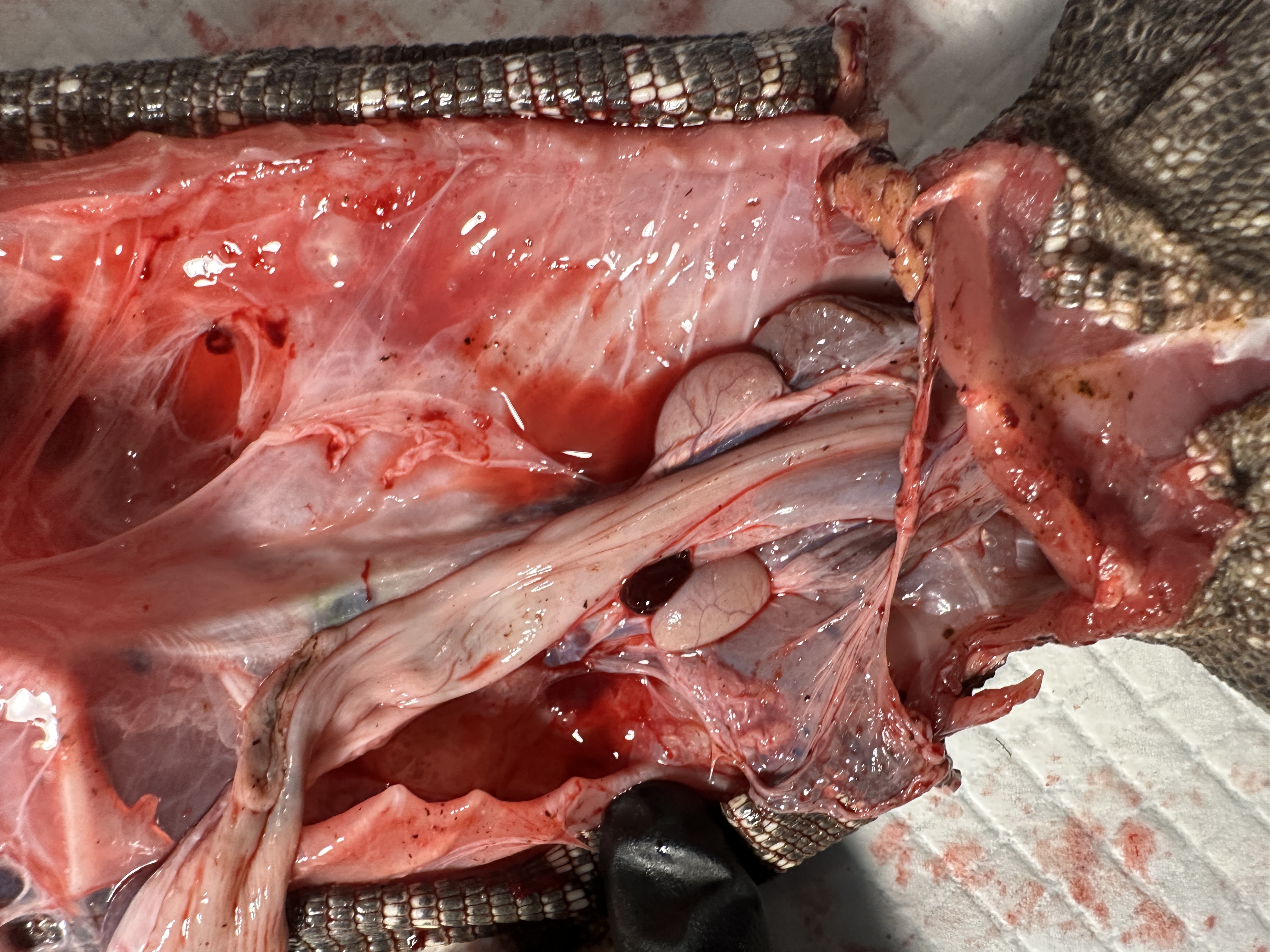
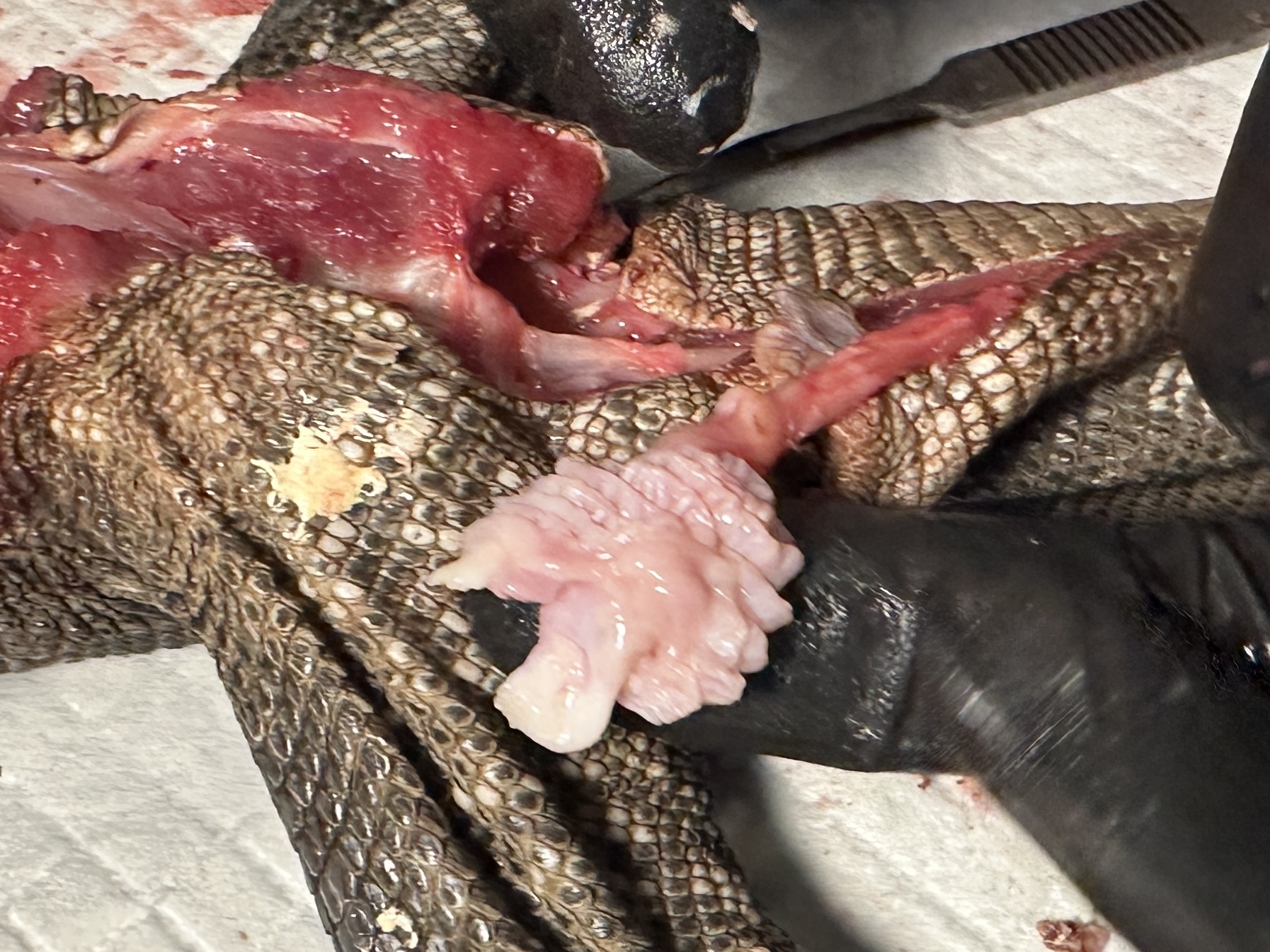
Finally, making an incision down through the cloaca into the tail base, the hemipenes were able to be observed, including large hemibacula that may not have yet seen any ossification (an assumption on my part, previous x-rays were taken Nov 2021 and no hemibacula were visible at that time. That was obviously quite some time ago).
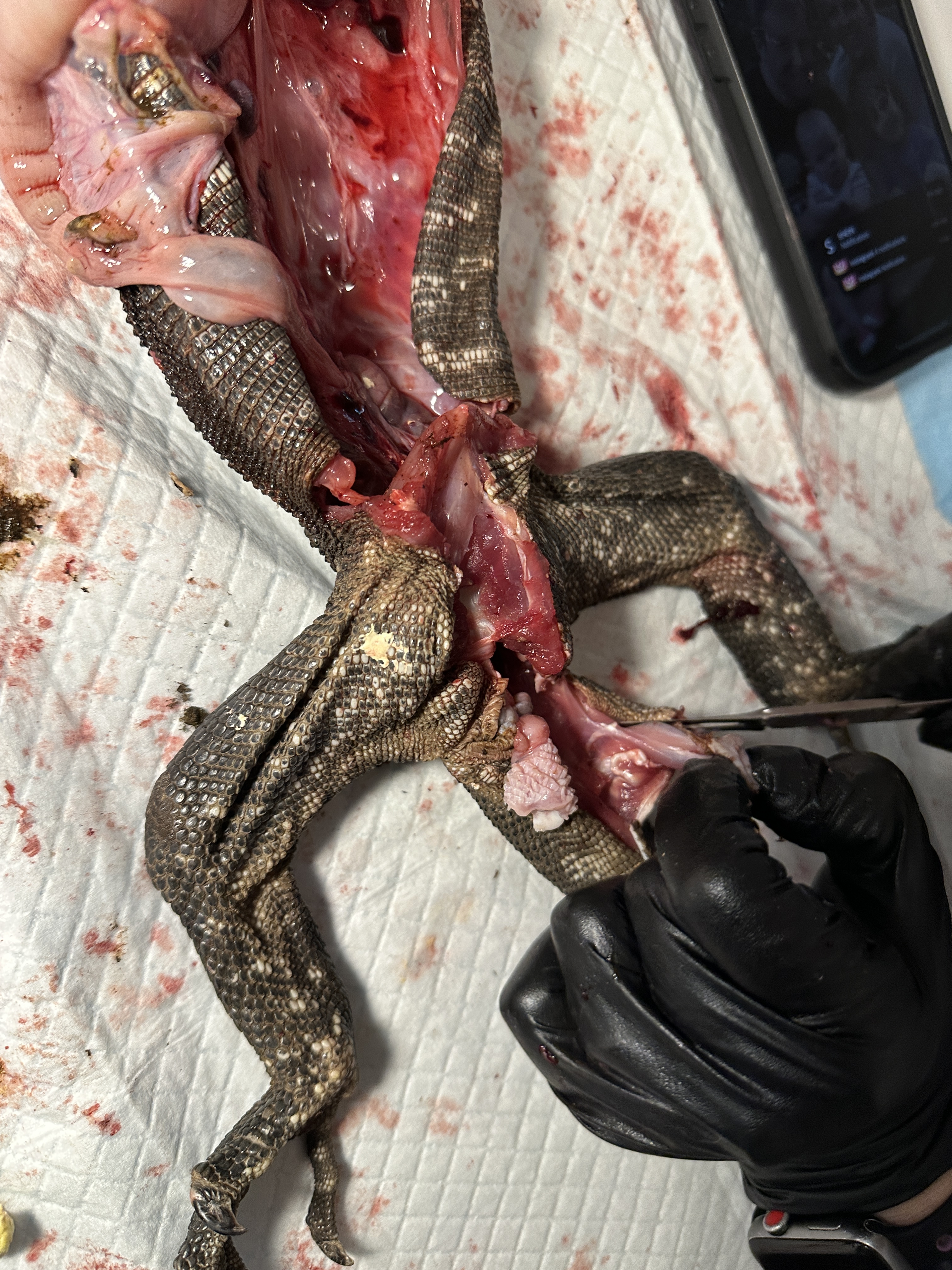
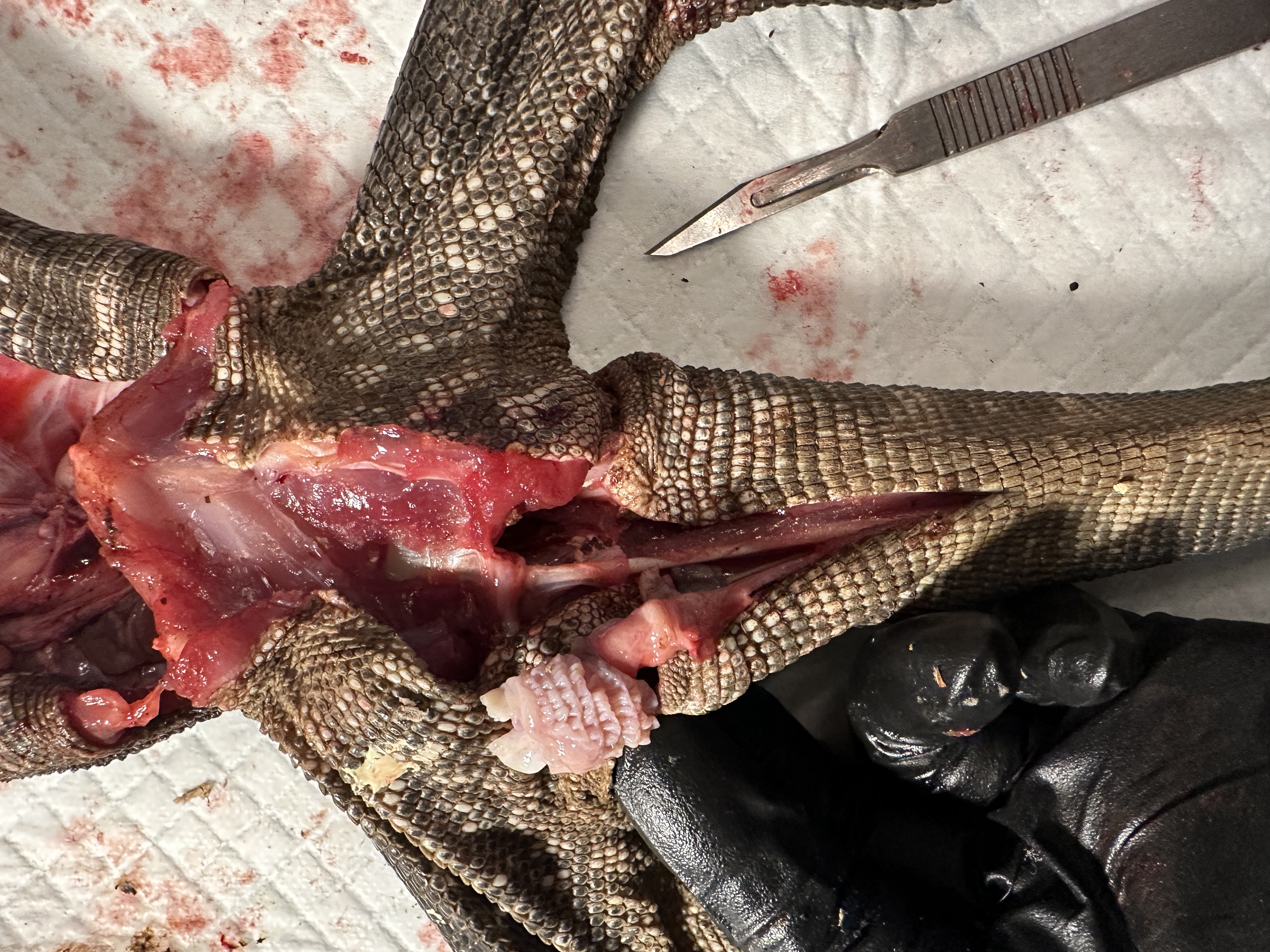
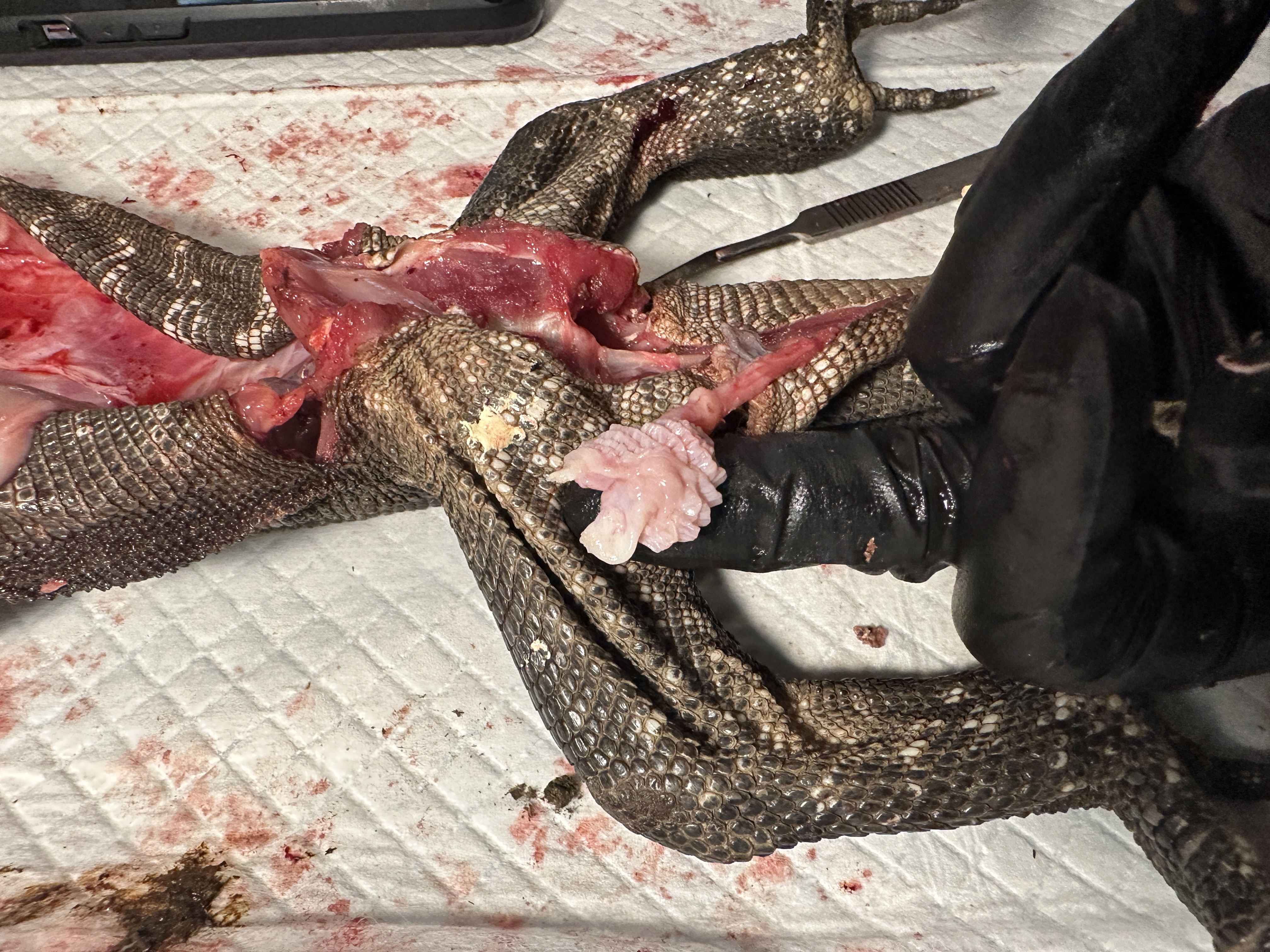
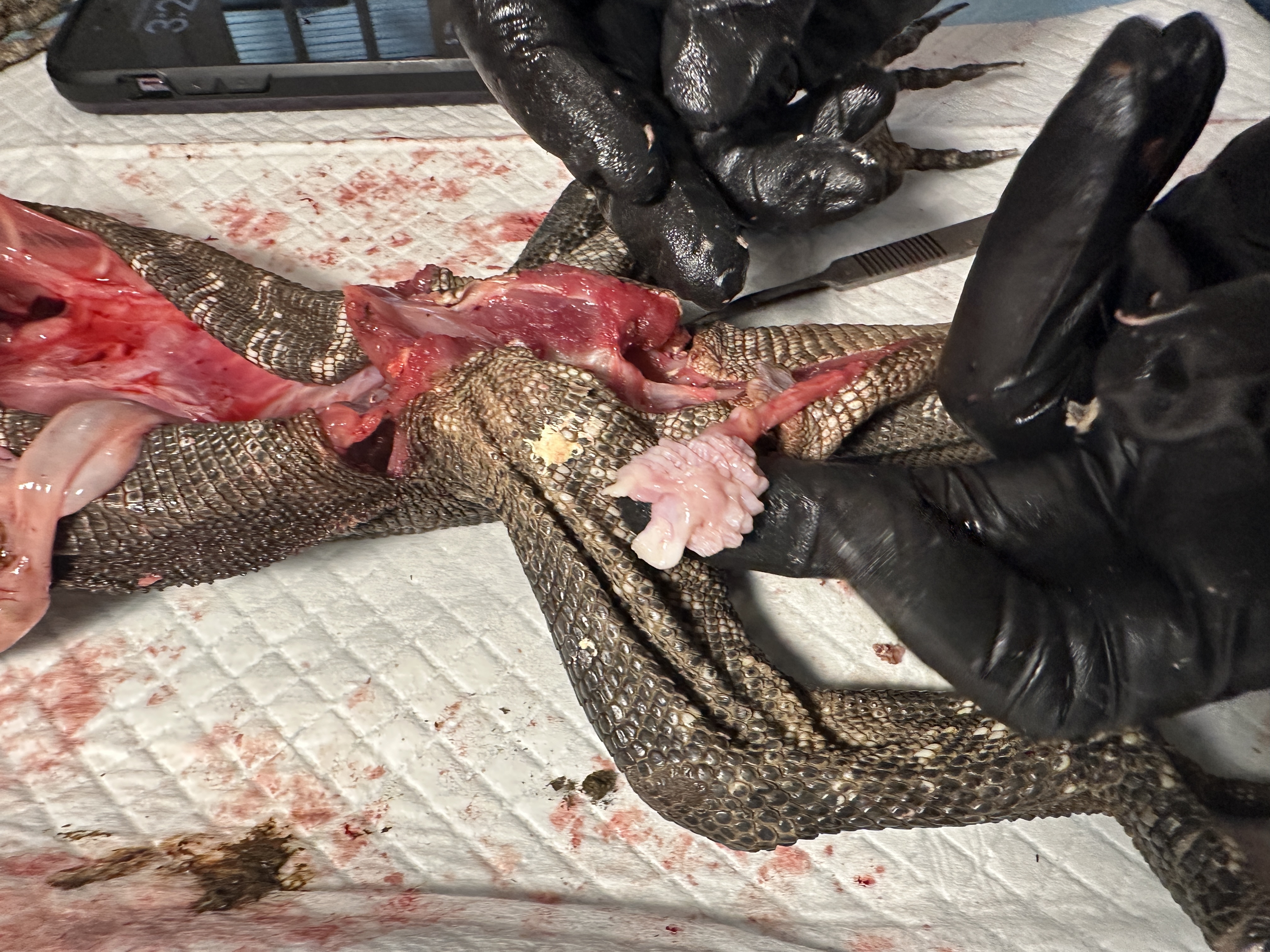
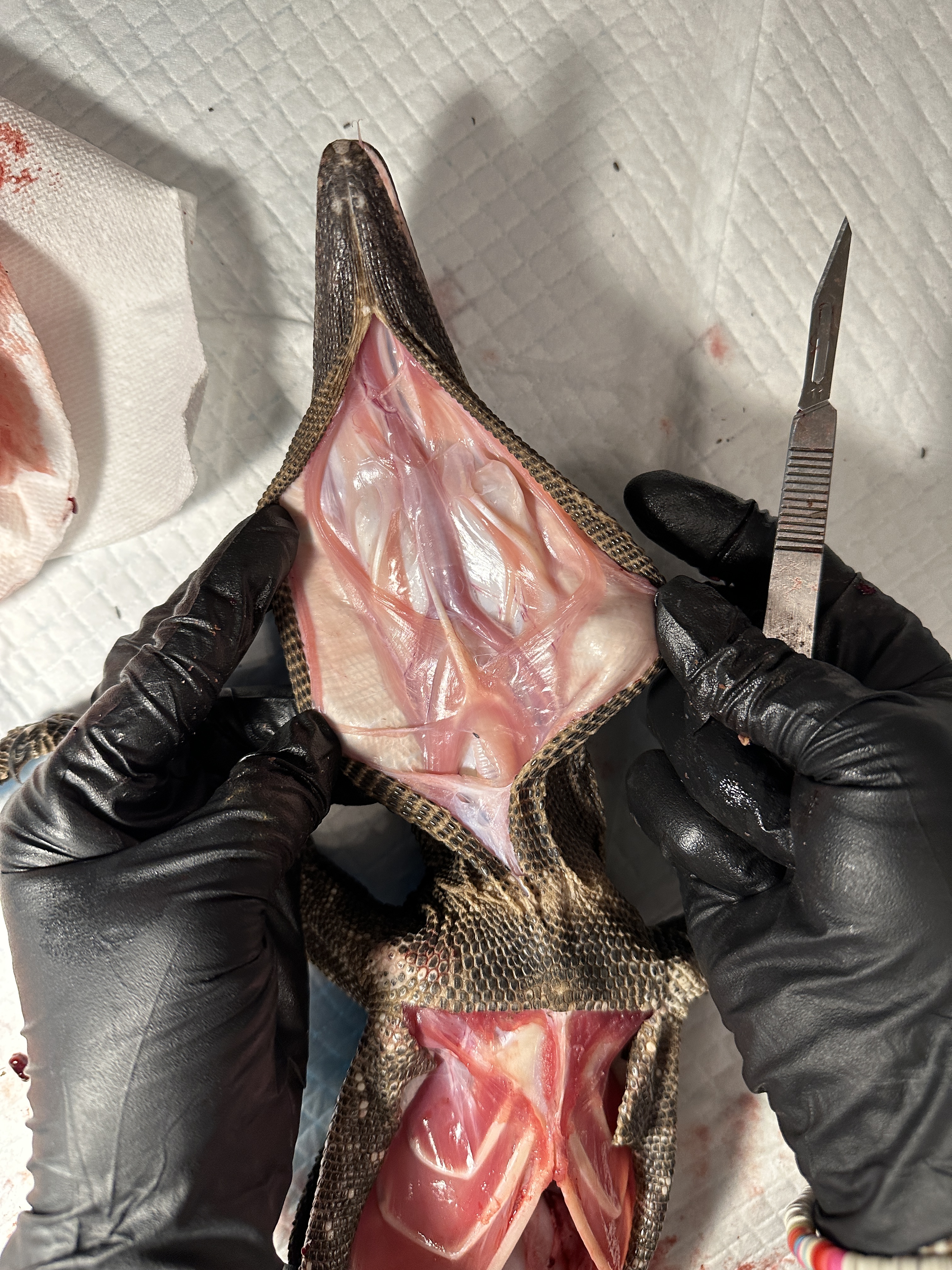
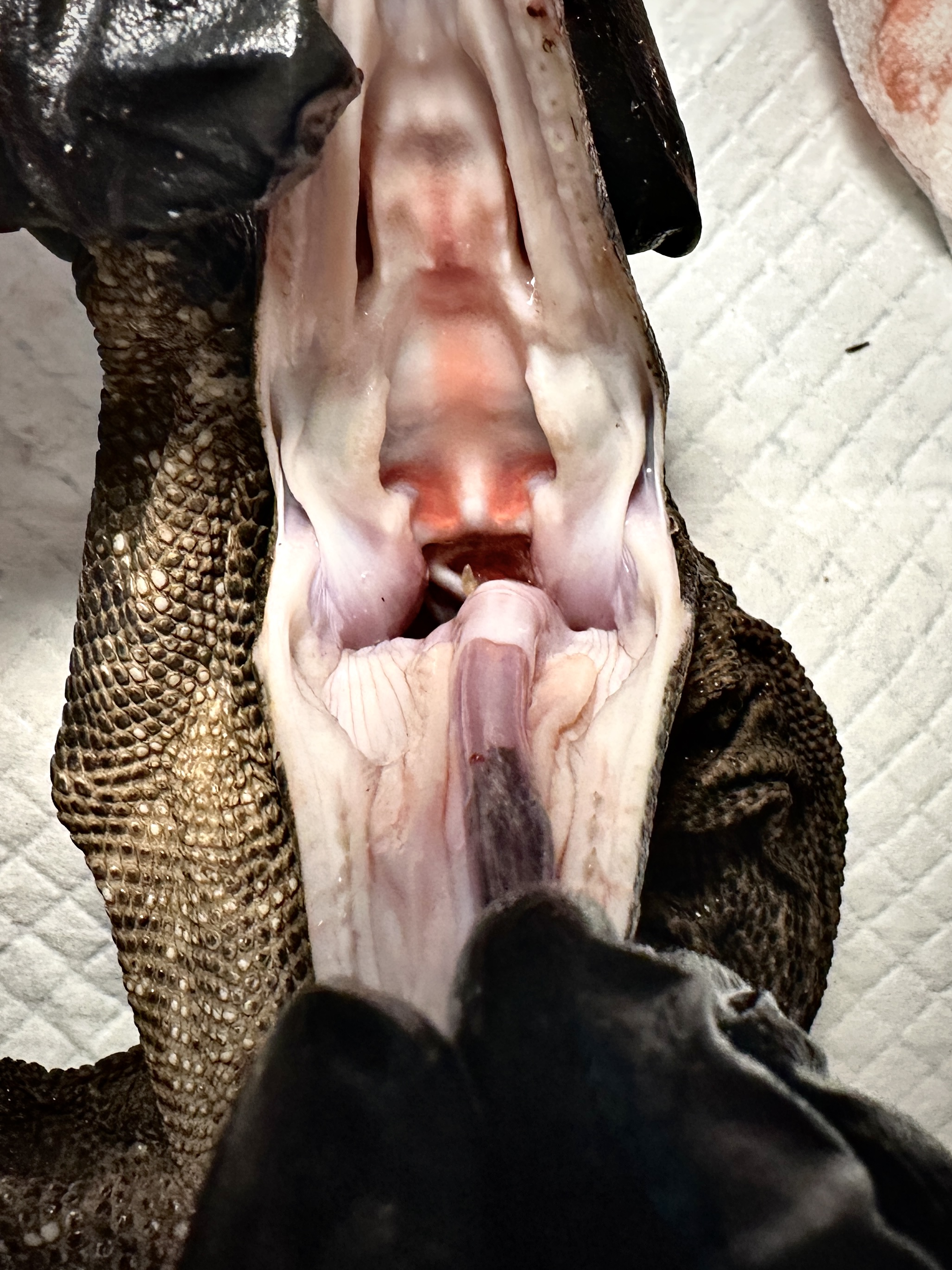
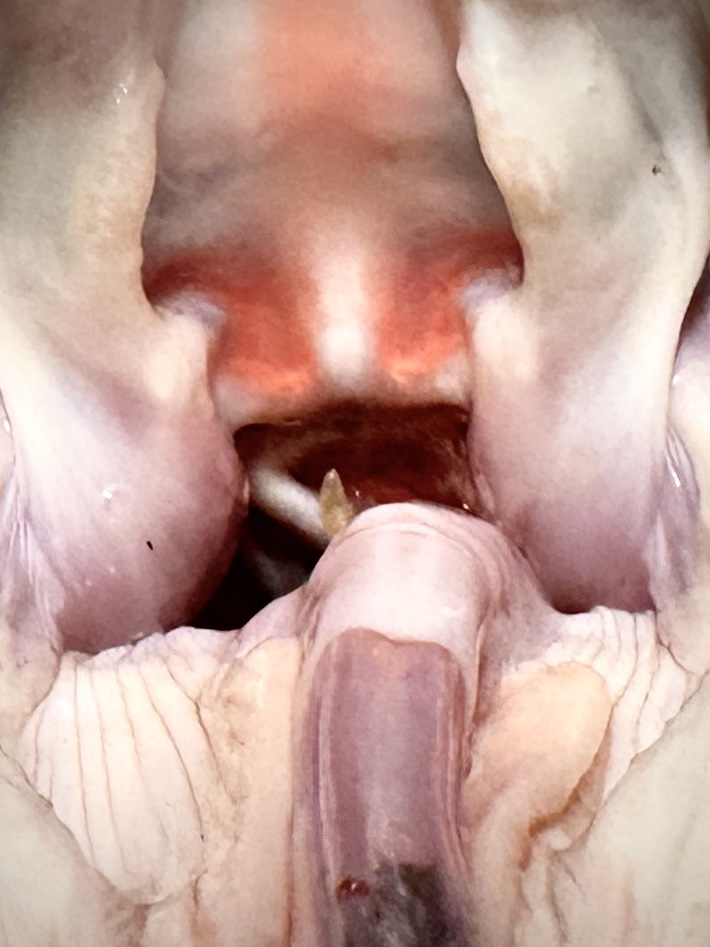
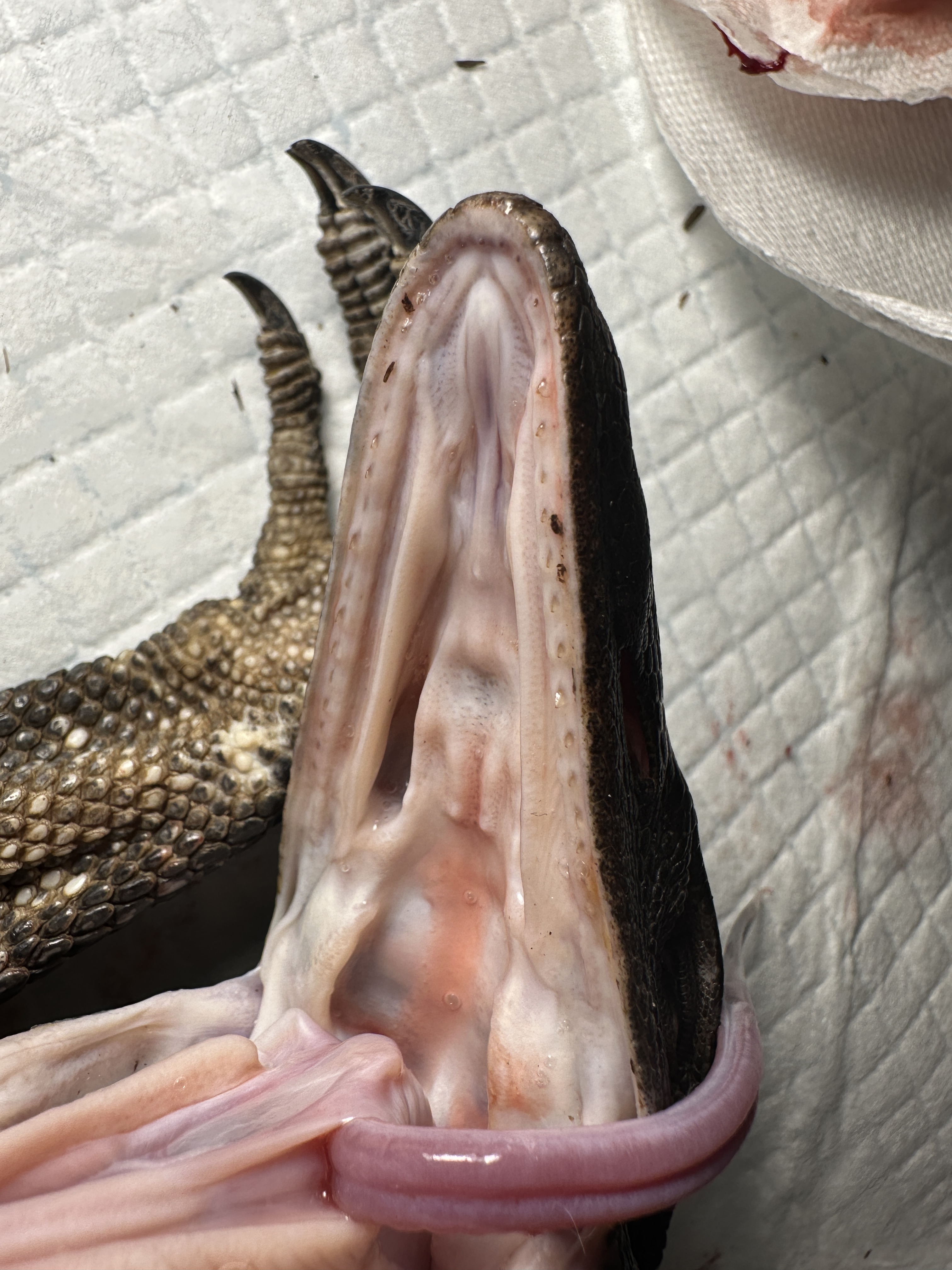
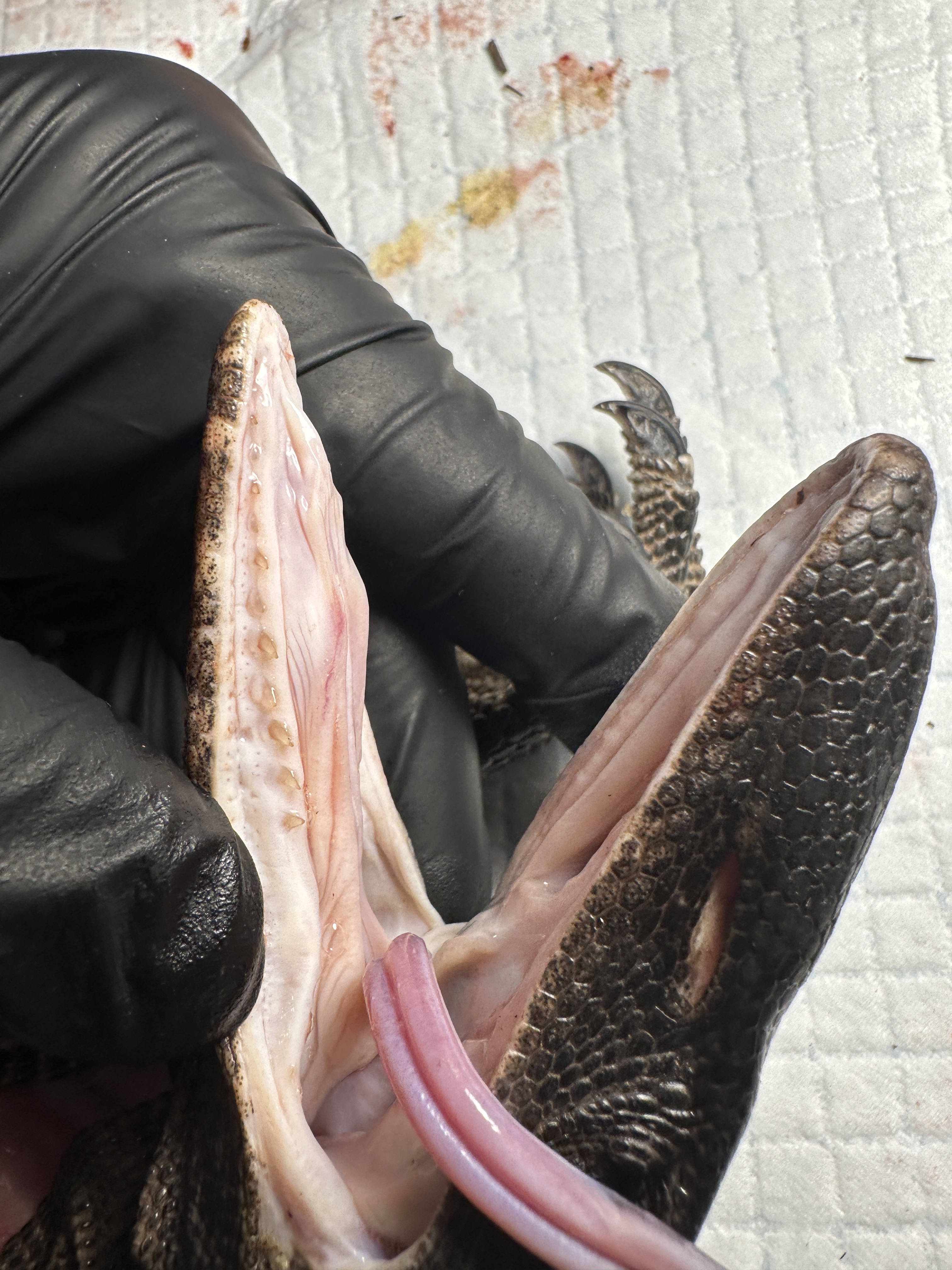
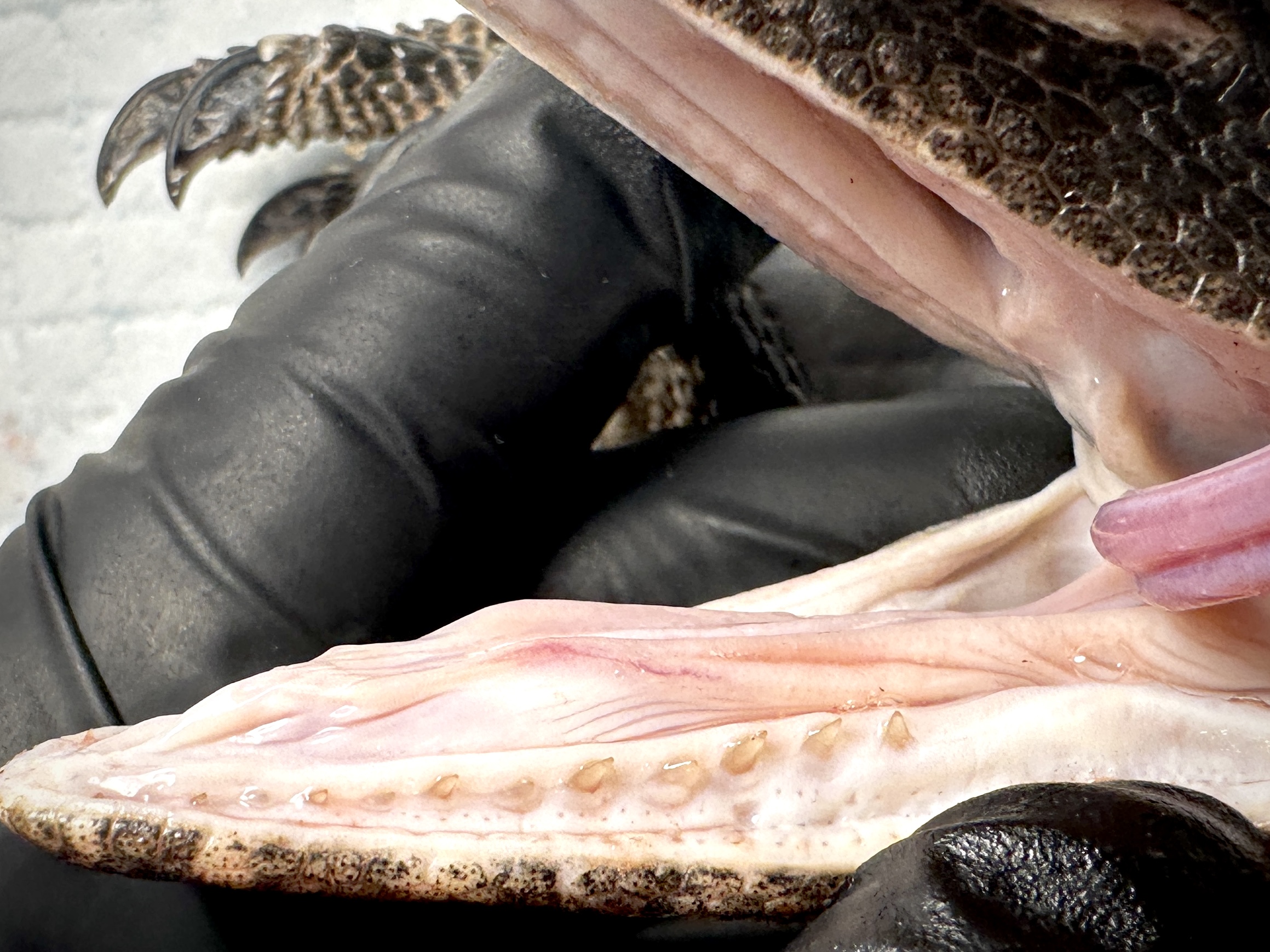
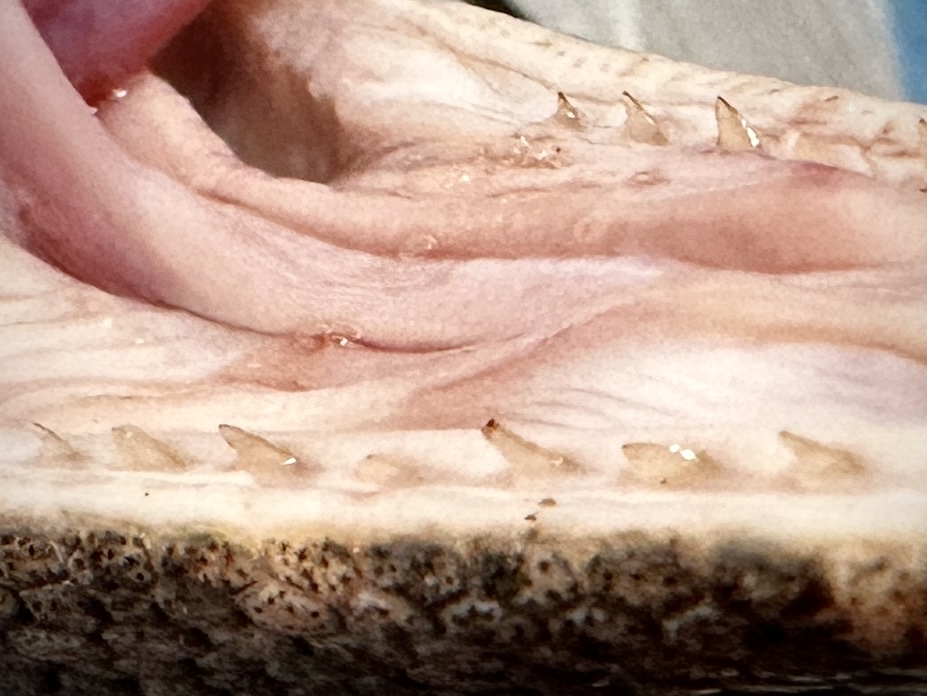
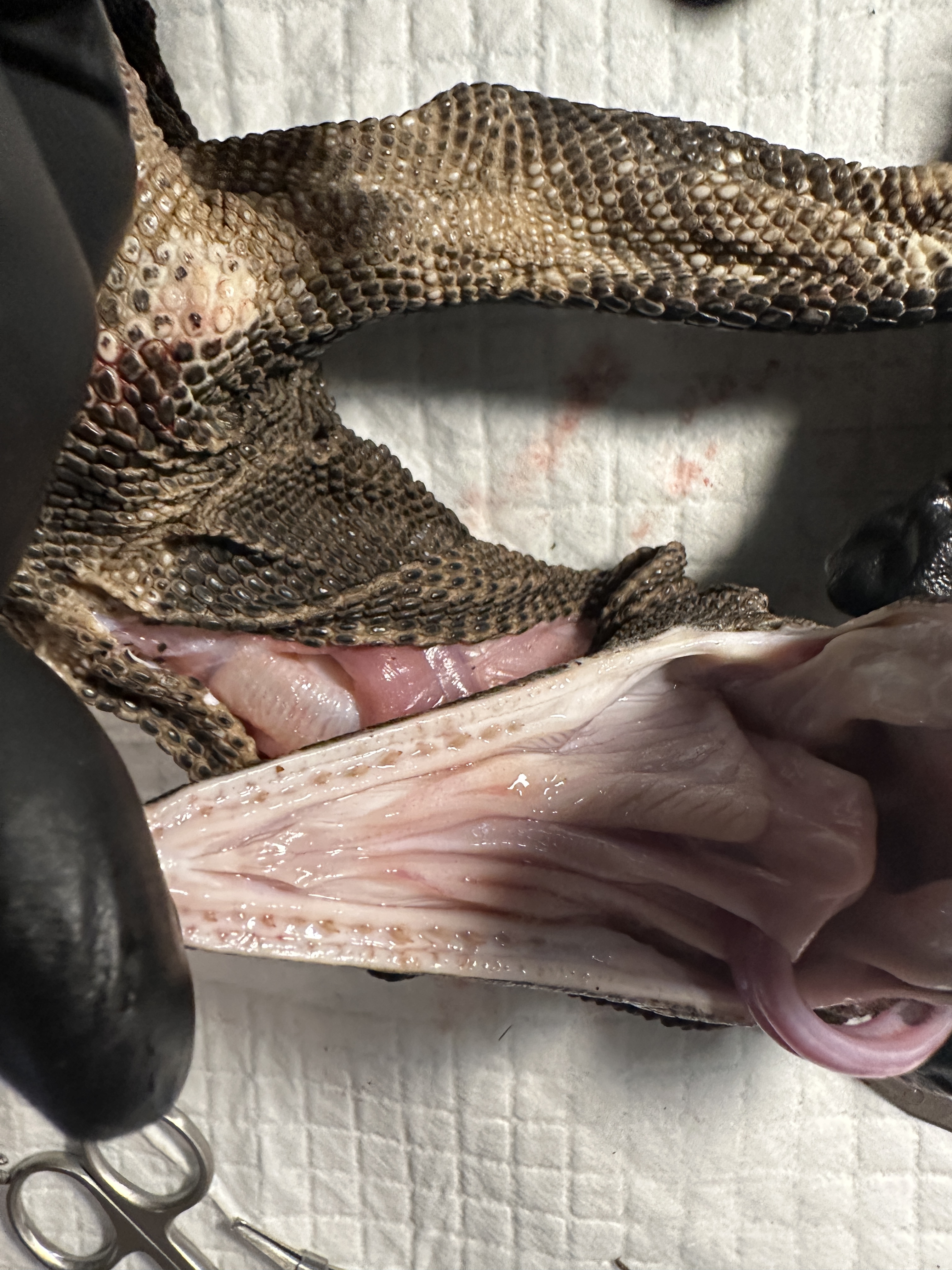
Lastly photographs were taken of the monitor’s neck and interior of the mouth and throat.
Conclusions
There were a few things I was looking for. Primarily I was looking for any fat stores that were out of place off increased around certain organs, enlargement of any organs or visible lesions on surfaces of any internal components. We did not see anything resembling those items.
Secondarily i wanted to see the contents of the stomach and the intestines, to check for possible impaction or parts of feeders that were undigested, for example bones, fur, etc. We also did not see anything along those lines.
Based on the condition of the monitor on arrival in 2020, and the continued condition he displayed despite providing identical conditions and circumstances under which my other monitors have thrived (including other roughnecks), I have to look toward the kidneys and renal system as the potential root of the steady decline. Degradation was surely occurring over the past few years, but given the initial appearance upon purchase it’s likely a trajectory toward kidney failure was already in progress when he was shipped in. Unfortunately due to circumstances and lack of preparedness, I was unable to pull a blood sample to have analyzed so this is circumstantial conjecture.
Off the record, I suspected from interacting with this particular lizard over the last three years, that with wild caught imports there is a point where they’re large enough or old enough where they can no longer effectively acclimate to captivity, in that there is a “window of opportunity” for them to be even somewhat comfortable, that closes. I don’t know if that’s true primarily for roughnecks and other notoriously anxious lizards, or whether it’s across all wild caught varanids. Roughnecks are very, very susceptible to stress and are one of the most difficult varanids to acclimate in my own experience. Whether the final cause of death was related to, or driven by, kidney failure, I can’t help but l also look at stress as an exacerbating factor.
 varanus.io